

What to Say (and Not Say) During a Traffic Stop in Ontario
Bottom line: At a stop, be polite and hand over your documents, but you don’t have to admit to speeding or estimate your speed—what you say can become evidence. You have 15 days to fight the ticket, and NextLaw reviews it for free.
The moment you see those flashing lights in your mirror, what you say and do matters more than you might think. How you handle a traffic stop can affect both the immediate interaction and any future case. Here’s what you need to know.
What You Should Do
Jon Cohen, who has represented thousands of drivers in traffic cases, outlines the basics:
Pull Over Safely
- Signal and pull to the right shoulder or a safe location
- Don’t make sudden moves
- Turn off your engine
- Stay in your vehicle unless the officer asks you to exit
Keep Your Hands Visible
Put your hands on the steering wheel where the officer can see them. Don’t reach for anything until the officer approaches and you can tell them what you’re reaching for.
Provide Required Documents
When asked, provide your driver’s license, vehicle registration, and insurance card. You’re legally required to provide these. Inform the officer before reaching for documents: “My registration is in the glove compartment.”
Be Polite
Being respectful doesn’t mean admitting guilt—it means treating the officer professionally. A confrontational attitude doesn’t help your case and can escalate the situation unnecessarily.
What You Should NOT Do
Dan Joffe, traffic lawyer at NextLaw, identifies common mistakes:
Don’t Admit to Speeding
If the officer asks “Do you know how fast you were going?” you’re not required to answer. Options include: “I’m not sure” or simply declining to answer. Saying “Yes, I was going 120” is an admission that can be used against you at trial.
Don’t Argue
The roadside isn’t the place to fight your ticket. Arguing won’t change the officer’s mind and can only hurt you. Save your defense for court.
Don’t Make Excuses
Explaining why you were speeding (late for work, didn’t see the sign, speedometer broken) doesn’t help and might actually hurt. These statements can be used at trial. Silence is often better.
Don’t Discuss Your Defense
Jon Cohen emphasizes: don’t tell the officer how you plan to fight the ticket. Don’t mention that you’ll be requesting disclosure or challenging the calibration. Keep your defense strategy to yourself.
Don’t Consent to Searches
If asked to search your vehicle, you can politely decline: “I don’t consent to searches.” The officer may search anyway if they have grounds, but consenting waives certain rights.
The Magic Phrase
Dan Joffe notes that when in doubt, a simple response works well:
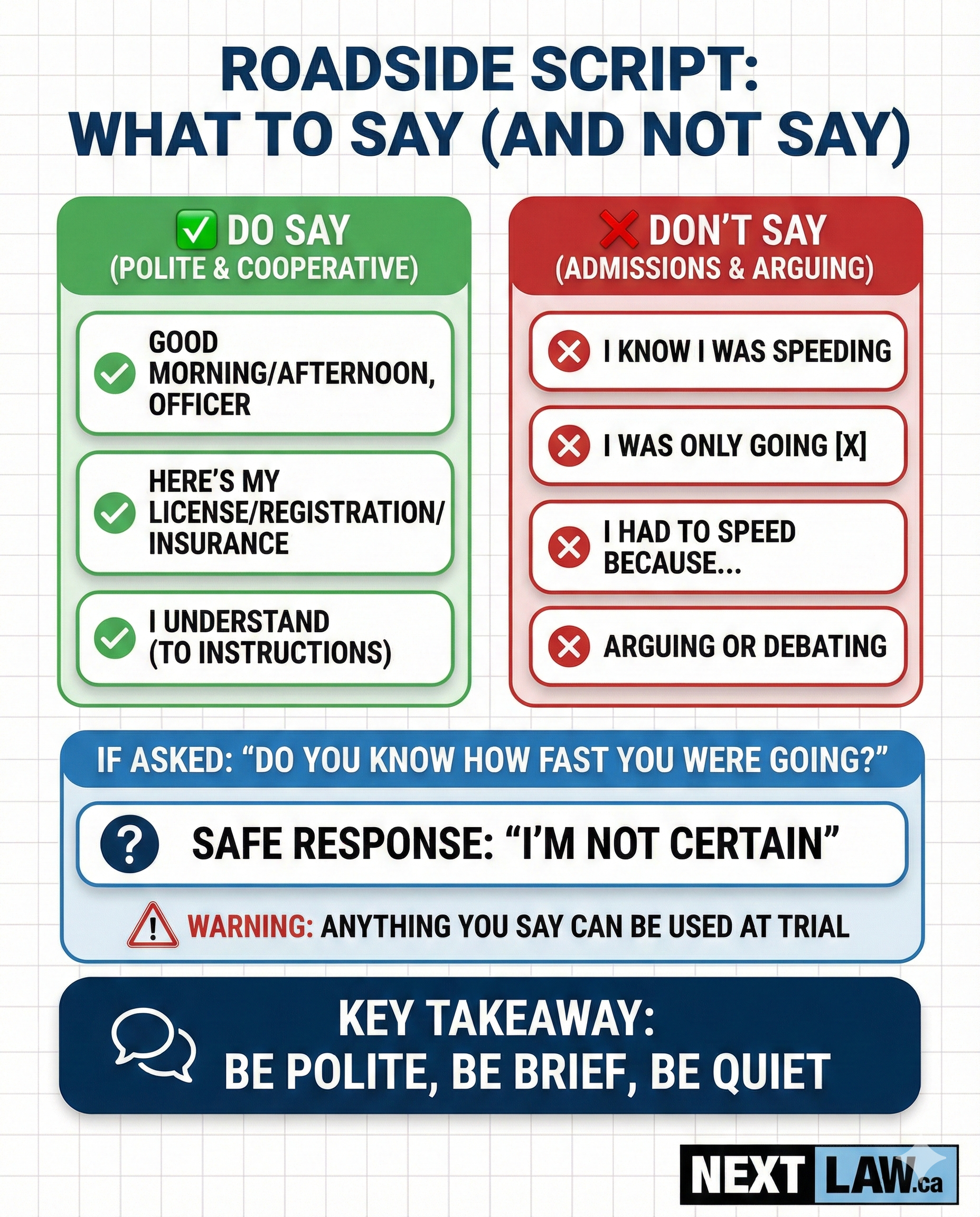
“I understand” or “I’d prefer not to answer” are neutral statements that don’t admit guilt, don’t antagonize the officer, and don’t create statements that can be used against you.
Everything Can Be Used Against You
Jon Cohen emphasizes a fundamental reality: anything you say at the traffic stop can appear in the officer’s notes and be used as evidence at trial. Officers are trained to note admissions and statements. The less you say beyond required information, the fewer potential issues for your defense.
After the Stop
Once you’ve received the ticket and the officer leaves, don’t discuss the incident with passengers or make notes while parked on the roadside. Drive somewhere safe, then calmly review what happened and note important details while they’re fresh.
Insurance Impact: Why This Matters
What you say at a traffic stop can determine whether you fight your ticket or not. If you admitting guilt on the roadside, your case is much harder to defend later. Here’s what a conviction costs:
- 1–15 km/h over (0 demerit points): $510–$1,200 over three years
- 16–29 km/h over (3 demerit points): Same as above for most insurers
- 30–49 km/h over (4 demerit points): $1,785–$4,335 over three years
On average Ontario premiums of $2,500, a conviction can cost up to $1,875 in insurance surcharges over three years. Protecting your defense options at the roadside is protecting your wallet later.
NextLaw Client Success
“The time, effort, and commitment they invested were far beyond what I expected. I cannot thank them enough for their support during one of the most stressful periods of my life.” — Khushbu Bhambhwani, NextLaw Client
Protect Your Rights, Stay Safe
A traffic stop is a legal interaction with real consequences. Being polite, providing required documents, and saying as little as possible beyond that protects both your immediate safety and your future legal options. What happens at the roadside can affect what happens in court—so handle it wisely.
Frequently Asked Questions
What should I say if I’m pulled over for speeding?
Be polite and brief. You must provide licence, insurance, and registration, but you are not required to admit to speeding or estimate your speed.
Do I have to tell the officer how fast I was going?
No. You don’t have to answer questions that admit guilt. Politely providing your documents is enough; you can decline to estimate your speed.
Can what I say at the stop be used against me?
Yes. Admissions like “I was only doing 20 over” can become evidence. Saying less protects your options if you later choose to fight.
Should I argue with the officer at the roadside?
No. The roadside is not where cases are won. Stay calm, take the ticket, and fight it later on the evidence — that’s where the leverage is.
Should I fight the ticket afterward?
Usually yes. A conviction costs points and years of higher insurance; a free review tells you whether fighting makes sense for your situation.
A Real Speeding Ticket Result
“I spoke with Jon initially about my driving offenses, and Jon and his team took care of all the rest. They went to work, ultimately keeping me on the road and working. I would recommend Nextlaw to anyone who has made a mistake on the roads.”
— Matthew Suceska-Lapierre, verified 5-star Google review
Talk to NextLaw
If you’ve been charged with speeding, get your ticket reviewed before you decide anything. Secure your free NextLaw speeding callback and we’ll explain your options and whether fighting makes sense.
Insurance figures above are estimates based on Ontario insurer filings; your actual increase depends on your insurer, history, and policy.
This article is based on NextLaw’s professional analysis of Ontario speeding legal procedures and is provided for informational purposes only. Every case presents unique circumstances, and outcomes depend on specific case facts and proper legal representation.

