

Self-Representation vs. Professional Help for Ontario Speeding Tickets
Should you fight a speeding ticket yourself or hire a professional in Ontario? You can represent yourself, and for a low-stakes ticket with no points that may be reasonable. But self-represented drivers commonly accept the first offer, miss technical defences in the disclosure, and make emotional arguments that courts don’t weigh. Professional representation is usually worth it when demerit points, insurance, or your job are on the line — because the potential insurance savings over three years can far outweigh a roughly $500 fee.
If you’ve received a speeding ticket, you might be wondering whether to represent yourself or hire a professional. This decision involves more than just the cost—it’s about understanding what you’re up against and whether you can effectively navigate it alone.
What Self-Represented Defendants Often Miss
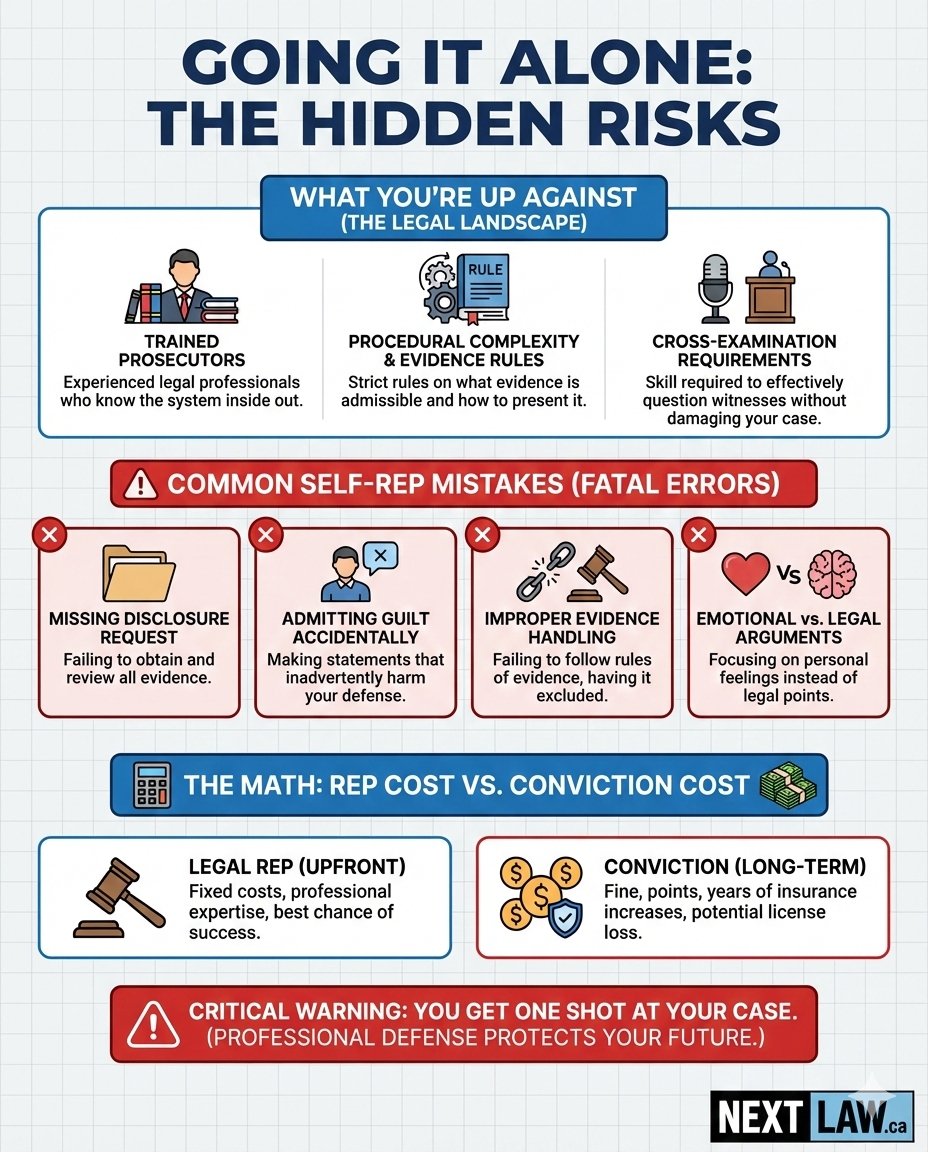
Self-represented defendants tend to follow predictable patterns that lead to suboptimal outcomes.
Accepting Early Offers
Self-represented defendants often accept the first offer a prosecutor makes. Without context about what constitutes a good deal versus a standard offer, they can’t evaluate whether to push for more.
Missing Technical Defenses
Disclosure analysis requires knowing what to look for—calibration issues, training certifications, procedural requirements. Self-represented defendants often lack this technical knowledge and miss potential defense opportunities.
Emotional Arguments Don’t Work in Court
Self-represented defendants frequently make emotional arguments: “I’m usually a good driver,” “I need my license for work,” “This isn’t fair.” Courts focus on evidence, not circumstances.
Procedural Mistakes
Court procedures can be unfamiliar and intimidating. Missing deadlines, failing to request disclosure, or not understanding trial protocol can undermine even strong cases.
What Professional Representation Provides
Professionals bring advantages that directly affect outcomes:
- Local knowledge of courts and prosecutors
- Understanding what deals are typical and when to push for more
- Technical expertise in analyzing disclosure for defense opportunities
- Courtroom experience and comfort with procedures
- Ability to handle appearances without client attendance
The Time Factor
Professional representation saves time. Multiple court appearances, waiting for your case to be called, navigating unfamiliar procedures—all of this takes time that has value. For employed drivers, taking time off work for court appearances can cost more than the representation fee.
When Self-Representation Might Work
Self-representation may be reasonable when:
- The stakes are relatively low—a small fine with no points
- You’re familiar with court procedures from previous experience
- The disclosure reveals obvious issues you can articulate clearly
- You have the time to attend court dates and learn the process
Even in these cases, understanding the full implications of different outcomes is essential.
When Professional Help Is Strongly Advisable
Professional representation makes sense when:
- Demerit points are significant—particularly for G1/G2 drivers near suspension thresholds
- Insurance implications are substantial—protecting a clean record or avoiding adding to existing convictions. A 30+ km/h over conviction could add an estimated $1,785–$4,335 over three years in insurance increases; a 15 km/h over conviction, an estimated $510–$1,200 over three years
- Your employment depends on your driving record—gig drivers, commercial drivers, delivery workers
- You simply don’t have time to attend multiple court dates
The Cost-Benefit Calculation
Professional representation typically costs around $500 (two payments). Compare this to:
- Insurance increases of $510–$4,335+ over three years
- Lost income from work time spent in court
- Potential consequences for employment or gig platform access
- The stress and uncertainty of navigating an unfamiliar system
For most drivers facing meaningful consequences, the math tends to favour professional help — the potential insurance savings from avoiding a conviction can far exceed the cost of representation.
NextLaw’s Approach
NextLaw handles all court appearances virtually (100% Zoom). You don’t even need to show up to court. Same person handles your case from first call to court date—no assembly-line approach.
Making Your Decision
Whether to self-represent or hire help depends on your specific situation, the stakes involved, and your comfort with court procedures. Understanding what professional representation provides—and what self-represented defendants typically miss—helps you make an informed choice.
Not every ticket is worth fighting—but every ticket is worth checking. Book a free call to discuss your specific situation.
Frequently Asked Questions
Can I fight a speeding ticket myself in Ontario?
Yes. You have the right to represent yourself. It can be reasonable when the stakes are low — a small fine with no demerit points and no meaningful insurance impact — and you’re comfortable requesting disclosure and attending court.
Is it worth hiring someone to fight a speeding ticket?
Often, yes. When demerit points, a clean-record insurance discount, or your employment are at stake, the potential insurance savings from avoiding a conviction can far exceed the cost of representation, which is typically around $500.
What do self-represented drivers get wrong most often?
The four most common mistakes are accepting the prosecutor’s first offer without knowing if it’s a good deal, missing technical defences in the disclosure (like calibration or certification issues), making emotional arguments courts don’t consider, and procedural errors like missing deadlines or not requesting disclosure.
Do I have to go to court if I hire a professional?
Usually not. NextLaw handles court appearances for clients — appearances are handled virtually, so most clients never have to attend court in person.
How much does it cost to fight a speeding ticket in Ontario?
Professional representation is typically around $500. Weighed against an estimated $510–$4,335+ in insurance increases over three years, plus lost income from court time, the cost of help is often smaller than the cost of a conviction.
Real Speeding Ticket Result
“The best decision you can make when needing a lawyer is NextLaw. I didn’t have to take time off work to appear in court, and I was updated on my case when needed. Instead of losing my license and points as well as a large ticket, I left with only having to pay a much smaller amount.” — Michael Anderson, NextLaw client (verified 5-star Google review #102)
Talk to a Speeding Ticket Law Firm
NextLaw is a law firm that focuses only on fighting Ontario speeding tickets to protect your insurance. The same person handles your case from the first call to the court date — no assembly-line approach. If you’re weighing whether to self-represent, a free 15-minute call can tell you what’s actually at stake. Book a free call with NextLaw or explore our free tools.
About these estimates. Insurance figures are projections based on Ontario insurance industry data. Your actual premium change depends on your insurer’s proprietary rules, your policy, and your driving record. NextLaw is a law firm, not an insurance broker.
This article is based on NextLaw’s professional analysis of Ontario speeding legal procedures and is provided for informational purposes only. Every case presents unique circumstances, and outcomes depend on specific case facts and proper legal representation.

