

What Is Disclosure for a Speeding Ticket in Ontario?
What is disclosure for a speeding ticket in Ontario? It’s the evidence the prosecution would use against you — the officer’s notes, the radar or lidar reading, the device’s calibration records, and the officer’s certification — and you have a right to see it before you decide anything. You have to request it, and reviewing it is how you spot the weaknesses (an expired calibration, a serial-number mismatch) that can win or reduce your case.
If you’re fighting a speeding ticket in Ontario, you’ll hear the term “disclosure” frequently. Understanding what disclosure is and how to use it is essential for making informed decisions about your case.
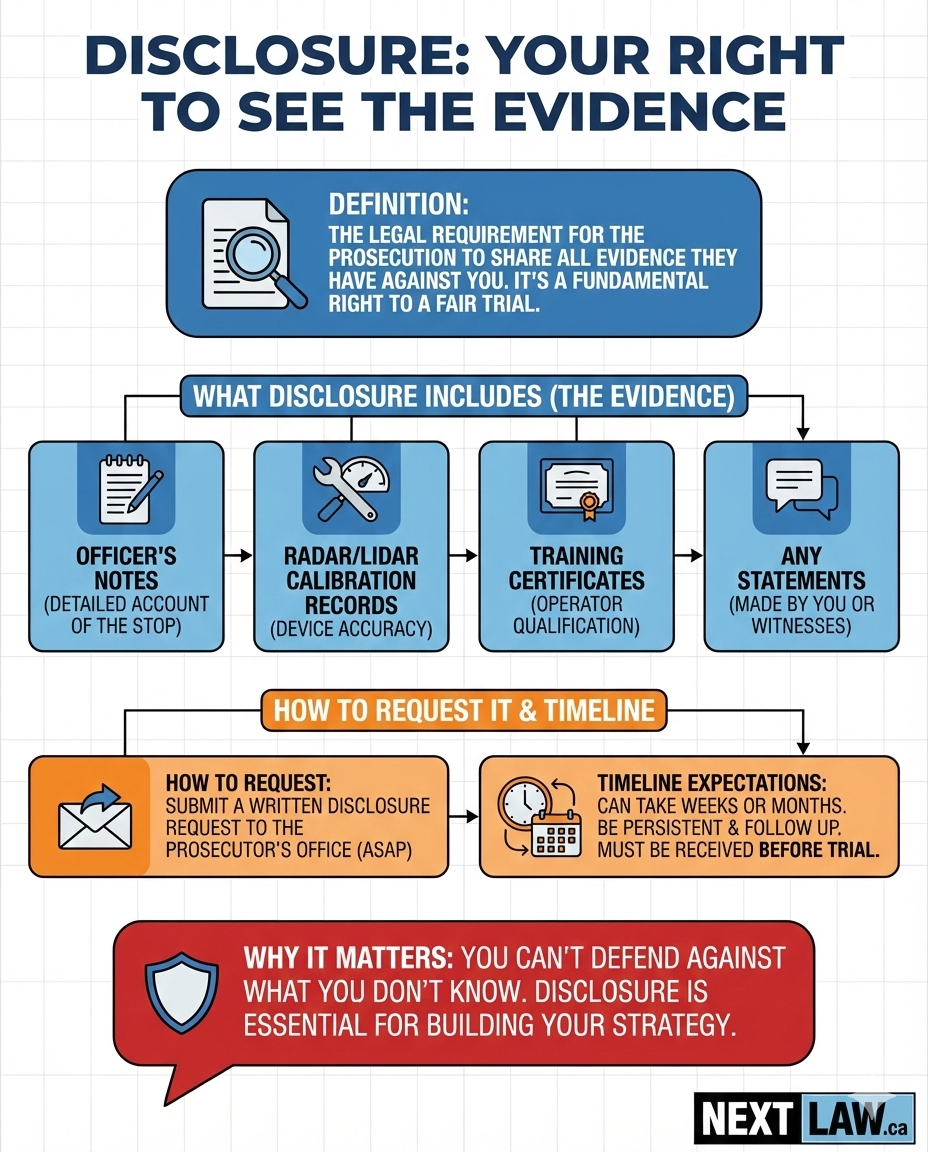
Disclosure Defined
Disclosure is all the evidence the prosecution intends to use against you. You have a right to receive this evidence before deciding how to proceed with your case.
For speeding tickets, disclosure typically includes:
- The officer’s notes from the traffic stop—their observations, the time, location, and circumstances of the stop
- The speed reading from the radar or lidar device
- Calibration records for the device—both annual certification and shift testing
- The officer’s training certification for operating the speed measurement device
- Any other relevant documentation
Why Disclosure Matters
Disclosure is the foundation for evaluating your case. Without seeing the evidence against you, you’re making decisions blind. You can’t assess whether the prosecution has a strong case or a weak one. You can’t identify potential defense opportunities. You can’t negotiate effectively.
Your Right to Disclosure
In Ontario’s legal system, you have a right to receive disclosure before trial. This right exists to ensure fairness—you shouldn’t have to defend against evidence you haven’t seen.
While the right to disclosure is fundamental, you must actually request it. It’s not automatically provided when you receive your ticket.
What to Look for in Disclosure
When reviewing disclosure, focus on key areas:
Calibration Records
- Is the annual calibration current?
- Were pre-shift and post-shift tests performed?
- Is the tuning fork (for radar) properly calibrated?
- Do serial numbers on certificates match the device used?
Officer’s Notes
- Are they legible and complete?
- Do they accurately describe the circumstances?
- Is there anything inconsistent or unclear?
Training Certification
- Is the officer certified to operate the specific device used?
- Is the certification current?
Technical Details
- Do the notes reflect proper operating procedures?
- Are there any environmental factors noted that could affect accuracy?
When Disclosure Reveals Problems
Disclosure review often reveals issues that affect case strategy:
- Missing calibration records can undermine the reliability of the speed reading
- Incomplete officer notes can create questions about what actually happened
- Expired certifications can affect the admissibility of evidence
- Inconsistencies can provide grounds for challenging the prosecution’s case
These issues might make fighting at trial more attractive, or they might provide leverage for negotiating a better resolution.
How to Request Disclosure
Disclosure requests are typically made after you’ve filed your intention to fight the ticket. The process varies slightly by court, but generally involves submitting a written request to the prosecutor’s office or court administration.
Request disclosure as early as possible in the process to allow time for review before any court appearances.
Never Negotiate Without Disclosure
One of the most common mistakes is attempting to negotiate—at early resolution meetings or otherwise—without first reviewing disclosure. This puts you at a severe disadvantage.
If the prosecution has weak evidence, negotiating before knowing that gives away leverage. If the prosecution has strong evidence, knowing that helps you set realistic expectations.
Disclosure as Your Defense Foundation
Disclosure isn’t just a procedural step—it’s the foundation for every decision you make about your case. Request it, review it carefully, and use what you learn to inform your strategy. Issues identified in disclosure often lead to better outcomes at early resolution or trial, whether through withdrawal, reduction, or dismissal.
Not every ticket is worth fighting—but every ticket is worth checking. Book a free call to request and review your disclosure.
Frequently Asked Questions
What is disclosure for a speeding ticket in Ontario?
It is all the evidence the prosecution intends to use — the officer’s notes, the radar or lidar reading, the device’s calibration records, and the officer’s training certification. You have a right to it before deciding how to proceed.
How do I request disclosure for a speeding ticket?
After you file your intention to dispute (within 15 days), submit a written request to the prosecutor’s office or court administration. It is not sent automatically — you must ask, and the earlier the better.
What should I look for in speeding-ticket disclosure?
Whether the device’s annual calibration is current, whether pre- and post-shift tests were done, whether the serial numbers on the certificate match the device used, whether the officer is certified on that device, and whether the notes are legible and complete.
Can disclosure get my speeding ticket dropped?
Sometimes. Missing calibration records, expired certifications, serial-number mismatches, or incomplete notes can create reasonable doubt or leverage that leads to a reduction or withdrawal.
Should I negotiate before reviewing disclosure?
No. Never negotiate at an early resolution meeting without reviewing disclosure first — you would be giving up leverage without knowing whether the prosecution’s evidence is strong or weak.
Real Speeding Ticket Result
“Jon Cohen and his team at NextLaw made the process as stress-free as possible. Jon was proactive in keeping me informed and consistently followed up throughout the entire case, and they worked diligently to achieve the best possible outcome.” — Cheikh Lo, NextLaw client (verified 5-star Google review #263)
Talk to a Speeding Ticket Law Firm
NextLaw is a law firm that focuses on fighting Ontario speeding tickets to protect your insurance. A free call takes about 15 minutes, and we can request and review your disclosure for you. Book a free call with NextLaw or explore our free tools.
This article is based on NextLaw’s professional analysis of Ontario speeding legal procedures and is provided for informational purposes only. Every case presents unique circumstances, and outcomes depend on specific case facts and proper legal representation.

