

What Actually Happens at a Speeding Ticket Trial in Ontario
What actually happens at a speeding ticket trial in Ontario? A Justice of the Peace hears the case, the officer testifies about the stop and the speed reading, and you (or your representative) cross-examine that evidence for weaknesses — calibration, procedure, or which vehicle was targeted. The single question is whether the prosecution proves the speed beyond a reasonable doubt; your reasons for speeding are irrelevant. A win means no conviction — and no insurance increase.
If you’re considering fighting your speeding ticket at trial, you might be wondering what actually happens in the courtroom. Understanding the trial process helps you prepare properly and set realistic expectations about how your case will unfold.
The Trial Process Step by Step
Here’s what to expect:
Arrival and Check-In
You arrive at the courthouse for your scheduled time. Check in with the court clerk or at the appropriate counter. You’ll typically wait in a courtroom or waiting area until your case is called.
Case Called
When your name is called, you approach the front of the courtroom. A Justice of the Peace presides. The prosecutor represents the prosecution. You (or your representative) represent yourself or your defense.
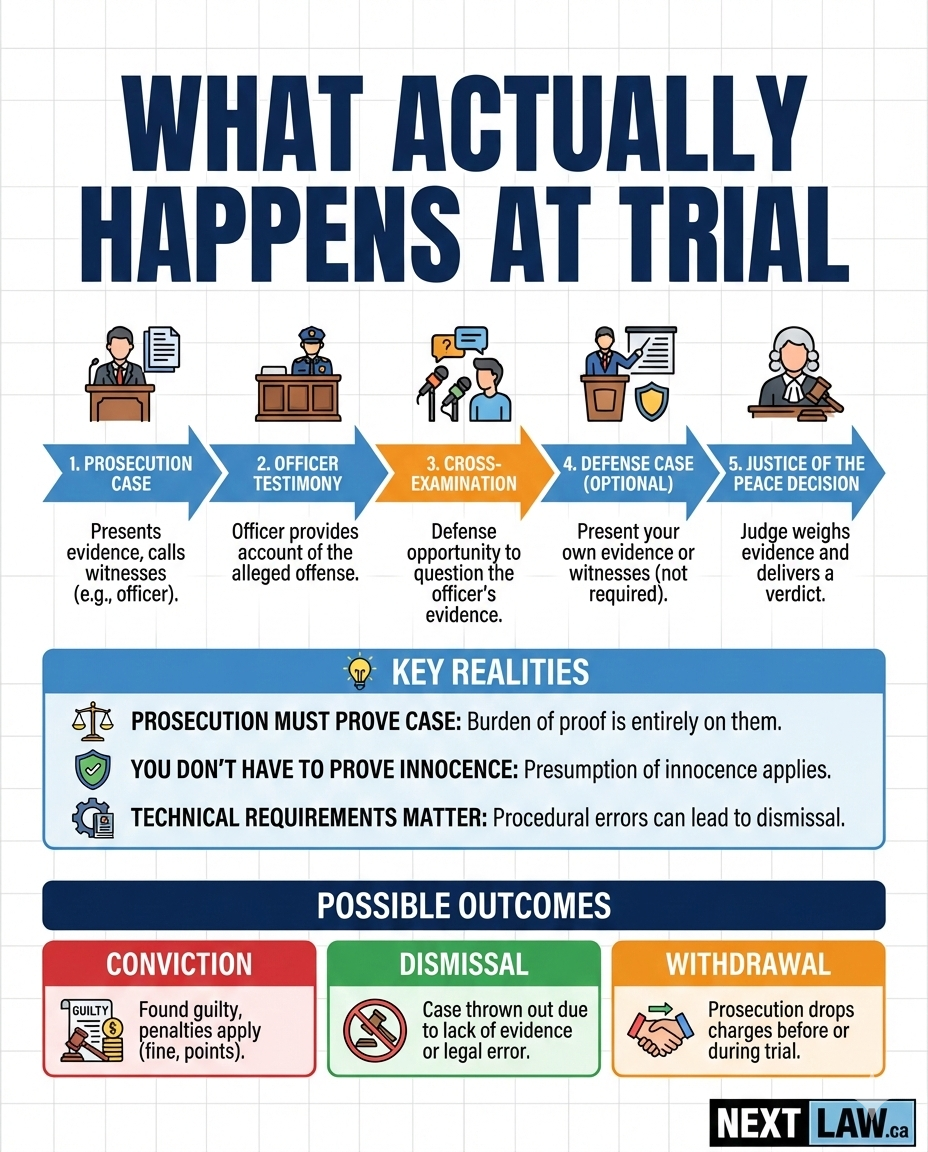
Prosecution Presents Their Case
The prosecution goes first. In speeding cases, this typically means the officer who issued your ticket testifies. They describe the circumstances of the stop, the equipment used, and the speed reading obtained. They may enter documents into evidence—calibration records, their notes, certifications.
Cross-Examination
After the officer testifies, you have the opportunity to cross-examine. This means asking questions designed to challenge the evidence or identify weaknesses in their testimony. Effective cross-examination focuses on technical issues: calibration, procedures, targeting accuracy. It’s not about arguing—it’s about asking questions that expose problems with the prosecution’s case.
Defense Presentation (Optional)
After the prosecution finishes, you can present your own evidence or testimony. However, in many speeding cases, the defense focuses on challenging the prosecution’s evidence rather than presenting independent evidence. You’re not required to testify or present anything.
Decision
After both sides have presented, the Justice makes a decision. They may announce it immediately or take a brief recess to consider. The decision is either guilty or not guilty.
What the Trial Is Actually About
Here’s the critical point: the trial is about whether the prosecution can prove, beyond a reasonable doubt, that you were speeding at the alleged speed. It’s not about:
- Whether you’re a good driver
- Whether you need your license for work
- Whether the fine is unfair
- Whether the officer was rude
The only question is whether the evidence proves the charge. Everything else is irrelevant to the Justice’s decision.
Common Trial Misconceptions
Several misunderstandings lead defendants astray:
- “I’ll explain my circumstances and the Justice will understand.” The Justice’s job is to evaluate evidence, not circumstances. Your reason for speeding (if you were) doesn’t change whether the charge is proven.
- “The officer probably won’t show up.” Officers appear in the vast majority of cases. Building a defense around hoping for a no-show is not a strategy (though it can happen).
- “I’ll tell my side of the story.” You can testify, but you’ll be cross-examined by the prosecutor. Testimony without preparation can hurt more than help.
When Trial Works in Your Favor
Trial is a strong option when:
- Disclosure reveals calibration or procedural problems
- There are questions about which vehicle was targeted
- The evidence has gaps or inconsistencies
- The prosecution’s case depends on elements that can be challenged
Sustained Pressure Strategy
NextLaw uses a strategy called sustained pressure in trial cases. Rather than relying on hope, we request disclosure repeatedly and build system friction. Pressure accumulates. At the trial date, there’s a 5–10% chance the officer doesn’t show (immediate dismissal). If the officer does show, we negotiate from a position of strength because the prosecutor wants to clear the case and often offers a better deal than early resolution would have provided.
The key is being prepared with disclosure analysis and evidence challenges—not relying on luck.
The Insurance Stakes at Trial
What happens at trial directly determines your insurance costs for the next three to six years. A 15 km/h over conviction costs $510–$1,200 over three years in insurance increases. A 30+ km/h over conviction costs $1,785–$4,335 over three years. A complete withdrawal or dismissal at trial means those costs are $0. This insurance reality is why trial preparation and evidence-based defense matter so much—the financial difference between conviction and acquittal extends far beyond the courtroom.
Preparation Is Everything
Trial outcomes depend heavily on preparation. Understanding the evidence, identifying weaknesses, and knowing how to effectively cross-examine are skills that come from experience. Going to trial unprepared often leads to conviction; going prepared gives you your best chance of success.
Not every ticket is worth fighting—but every ticket is worth checking. Book a free call to review your disclosure and discuss your trial options.
Frequently Asked Questions
What happens at a speeding ticket trial in Ontario?
A Justice of the Peace presides, the prosecutor calls the officer who issued your ticket to testify, and you or your representative cross-examine that evidence. You may present a defence, then the Justice decides guilty or not guilty. The only question is whether the prosecution proves the speed beyond a reasonable doubt.
Do police officers show up to speeding trials in Ontario?
Usually yes — officers appear in the large majority of cases. There is roughly a 5–10% chance of a no-show, which ends in dismissal, but you should not build a defence around hoping for it.
Can I just explain why I was speeding at trial?
No. The trial is about evidence, not circumstances. Your reason for speeding, your otherwise clean record, or the officer’s attitude do not affect whether the charge is proven — only the evidence does.
Is it worth going to trial for a speeding ticket?
It can be, especially when disclosure reveals calibration or procedural problems, or when a conviction’s insurance cost — an estimated $510–$4,335 or more over three years — far exceeds the cost of fighting. A dismissal or withdrawal means no insurance impact.
Do I have to attend my own speeding trial?
Not necessarily. With professional representation, your representative can attend for you, so most clients never have to appear in person.
Real Speeding Ticket Result
“I was worried about my charge effecting my insurance, considering the length of this case, I truly appreciate next law fighting tooth and nail for over a year to come out with the best possible results. My charges were dropped!!” — Chris Arokium, NextLaw client (verified 5-star Google review #77)
Talk to a Speeding Ticket Law Firm
NextLaw is a law firm that focuses on fighting Ontario speeding tickets to protect your insurance. A free call takes about 15 minutes and tells you whether your ticket is worth taking to trial. Book a free call with NextLaw or explore our free tools.
About this estimate. Insurance figures above are projections based on Ontario insurance industry data. Your actual premium change depends on your insurer’s proprietary rules, your policy, your driving record, and other personal factors. NextLaw is a law firm, not an insurance broker.
This article is based on NextLaw’s professional analysis of Ontario speeding legal procedures and is provided for informational purposes only. Every case presents unique circumstances, and outcomes depend on specific case facts and proper legal representation.

