

How many demerit points suspend a G1 or G2 driver in Ontario? Just 4 — versus 15 for a full G licence. A 16–29 km/h-over ticket is 3 points and a 30–49 ticket is 4 points, so a single ticket can suspend a novice driver for 30 days. Points are only added once a conviction is registered, which means winning at trial adds none at all.
If you’re a G1 or G2 driver in Ontario, you’re subject to stricter demerit rules than fully licensed drivers. G1 and G2 drivers face suspension at just 4 demerit points—compared to 15+ for G license holders. A single speeding ticket can trigger automatic suspension, and the conviction hits your insurance for years.
Here’s what you need to know about how demerit points work, when they’re added, and what they actually cost you.
The G1/G2 Threshold: Just 4 Demerit Points Triggers Suspension
While G license holders can accumulate 9–14 points before any warning and 15+ before suspension, G1 and G2 drivers face immediate consequences at just 4 points. A ticket at 30–49 km/h over the limit carries 4 demerit points—enough to suspend a novice driver’s license from one offense.
How the Timeline Works: From Ticket to Suspension
Understanding the process helps you make informed decisions:
- Day 0: You receive a speeding ticket. Your 15-day response deadline starts.
- Day 15: If you haven’t responded, automatic conviction occurs. If you’ve filed for trial, you await your court date.
- Court Date: Typically months later. If you’re convicted or pay the fine, the conviction is registered.
- Service Ontario Review: Service Ontario receives the conviction notification and adds demerit points to your record.
- Suspension Notice: If your total reaches 4+ points, Service Ontario automatically issues a 30-day suspension letter.
This process is administrative and automatic. The court doesn’t decide whether to suspend you. Service Ontario does, based purely on your point total.
Demerit Points for Speeding Offenses
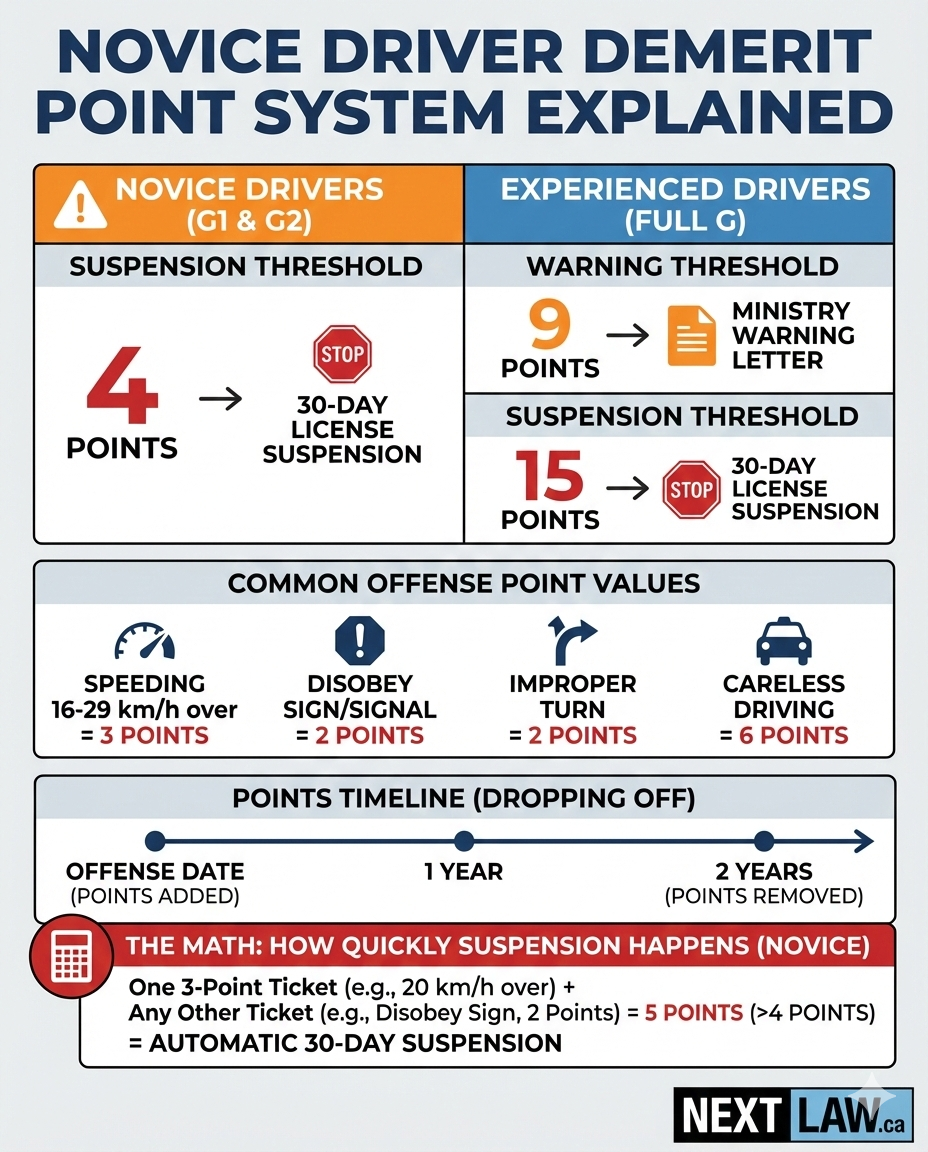
- 1–15 km/h over the limit: 0 demerit points (fine only)
- 16–29 km/h over: 3 demerit points
- 30–49 km/h over: 4 demerit points
- 50+ km/h over: 6 demerit points
Even a 3-point offense at 16–29 over leaves you dangerously close to the threshold. Any additional infraction—even a minor seatbelt violation—could push you over.
When Points Are Actually Added to Your Record
Demerit points are added when a conviction is registered, not when you receive the ticket. This creates an important window: if you fight your ticket and win, no points are added at all.
Points remain on your record for two years from the conviction date. But for novice drivers, this is secondary to the immediate risk: a 30-day suspension disrupts your life right now, and the conviction affects your insurance for much longer.
Demerit Points Don’t Equal Insurance Increases
A common misconception is that demerit points cause insurance increases. They don’t, at least not directly. Insurance companies look at your convictions, not your point total.
This means negotiating a reduced charge with fewer points doesn’t eliminate the insurance impact. You still have a conviction on your record that insurers will see and rate accordingly. A 3-demerit reduced charge still costs you $1,785–$4,335 over three years (major conviction for most Ontario insurers).
The Insurance Reality for Novice Drivers
G1 and G2 drivers already pay among the highest premiums in the province. A speeding conviction adds a 25% or greater surcharge on top of already-elevated rates. With young drivers often paying $4,000–$7,000 annually, that surcharge means an additional $1,000–$1,500 per year for three renewal cycles.
Under the new First Payer model, insurers are scrutinizing novice driver records more aggressively than ever. A conviction that also triggers a Service Ontario suspension creates a compounding effect—insurers see both the conviction and the suspension history, which can result in policy non-renewal or high-risk classification, pushing premiums even higher through the Facility Association.
The Strategy for Protecting Your Novice License
For G1 and G2 drivers, the strategy must be different than for experienced drivers:
- Don’t pay without considering consequences. That “minor” ticket could be the one that triggers suspension or creates a record that follows you for years.
- Request disclosure before making decisions. Understanding the evidence against you helps evaluate your real options.
- Consider the long-term math. The cost of fighting a ticket is often far less than the insurance increases from a conviction—and for novice drivers, the stakes include potential suspension.
NextLaw’s Sustained Pressure Strategy
Rather than taking the first resolution deal offered early, we opt for trial—not because we want a trial, but because the court rarely does. We request disclosure repeatedly, creating system friction. Pressure accumulates. At the trial date, there’s a 5–10% chance the officer doesn’t show (immediate win). If the officer does show, we negotiate from a position of strength because the prosecutor wants to clear the case.
No other firm explains a named strategy on the first call.
The Bottom Line
The graduated licensing system provides valuable protections for new drivers, but its strict demerit rules mean novice drivers must be especially vigilant about their driving records. Understanding how points work and how quickly they can lead to suspension is the first step in protecting your license.
Not every ticket is worth fighting—but every ticket is worth checking. A free call takes 15 minutes and gives you complete clarity on your options and real-world costs.
Frequently Asked Questions
How many demerit points can a G1 or G2 driver get before suspension?
Just 4, versus 15 or more for a full G licence. A single 30–49 km/h over ticket (4 points) can suspend a novice driver for 30 days.
When are demerit points added to my record?
When the conviction is registered — not when you get the ticket. If you fight the ticket and win, no points are added at all.
How long do demerit points stay on a novice driver’s record?
Two years from the conviction date. But the bigger risks are the immediate 30-day suspension and the multi-year insurance impact.
Do demerit points raise my insurance?
Not directly. Insurers rate the conviction, not the points, so a reduced charge with fewer points can still leave an insurance increase.
How much do speeding demerit points cost a novice driver?
The points themselves do not set the price, but the underlying conviction commonly adds about $1,000–$1,500 a year for three years on already-high novice premiums, plus high-risk pricing if a suspension follows.
Real Speeding Ticket Result
“I spoke with Jon initially about my driving offenses, and Jon and his team took care of all the rest. They went to work, ultimately keeping me on the road and working. I would recommend Nextlaw to anyone who has made a mistake on the roads.” — Matthew Suceska-Lapierre, NextLaw client (verified 5-star Google review #349)
Talk to a Speeding Ticket Law Firm
NextLaw is a law firm that focuses on fighting Ontario speeding tickets to protect your insurance and your licence. If you’re a G1 or G2 driver worried about the 4-point threshold, a free 15-minute call can tell you where you stand. Book a free call with NextLaw or explore our free tools.
About this estimate. Insurance figures above are projections based on Ontario insurance industry data. Your actual premium change depends on your insurer’s proprietary rules, your policy, your driving record, and other personal factors. NextLaw is a law firm, not an insurance broker.
This article is based on NextLaw’s professional analysis of Ontario speeding legal procedures and is provided for informational purposes only. Every case presents unique circumstances, and outcomes depend on specific case facts and proper legal representation.

