

Why You Should Get Disclosure Before Meeting the Prosecutor
Should you get disclosure before meeting the prosecutor? Always. The prosecutor has already seen the officer’s notes and the calibration records; you’ve only seen the ticket. Negotiating without disclosure means you can’t spot the weaknesses that give you leverage — drivers who prepare consistently get better outcomes than those who walk in blind. Request it, review it, and only then talk resolution.
If you’re planning to attend an early resolution meeting or negotiate with a prosecutor about your speeding ticket, there’s one step you should never skip: requesting and reviewing disclosure first. Drivers who negotiate without disclosure consistently achieve worse outcomes than those who prepare properly.
The Knowledge Imbalance
The prosecutor knows their case; you don’t. They’ve seen the officer’s notes, the calibration records, and all the evidence. You’ve only seen the ticket itself.
Negotiating without this information means you can’t evaluate whether the prosecution’s case is strong or weak. You can’t identify issues that give you leverage. You can’t make informed decisions about what resolution to accept.
The Common Mistake
A driver shows up for early resolution. The prosecutor offers to reduce the speed slightly. The driver accepts, thinking they got a good deal. Later, a review would have revealed the calibration certificate was expired—the prosecution’s case had a significant weakness they never exploited.
Without disclosure, the driver never knew they had leverage for a better outcome.
The Proper Sequence
Here’s how to handle your speeding ticket properly:
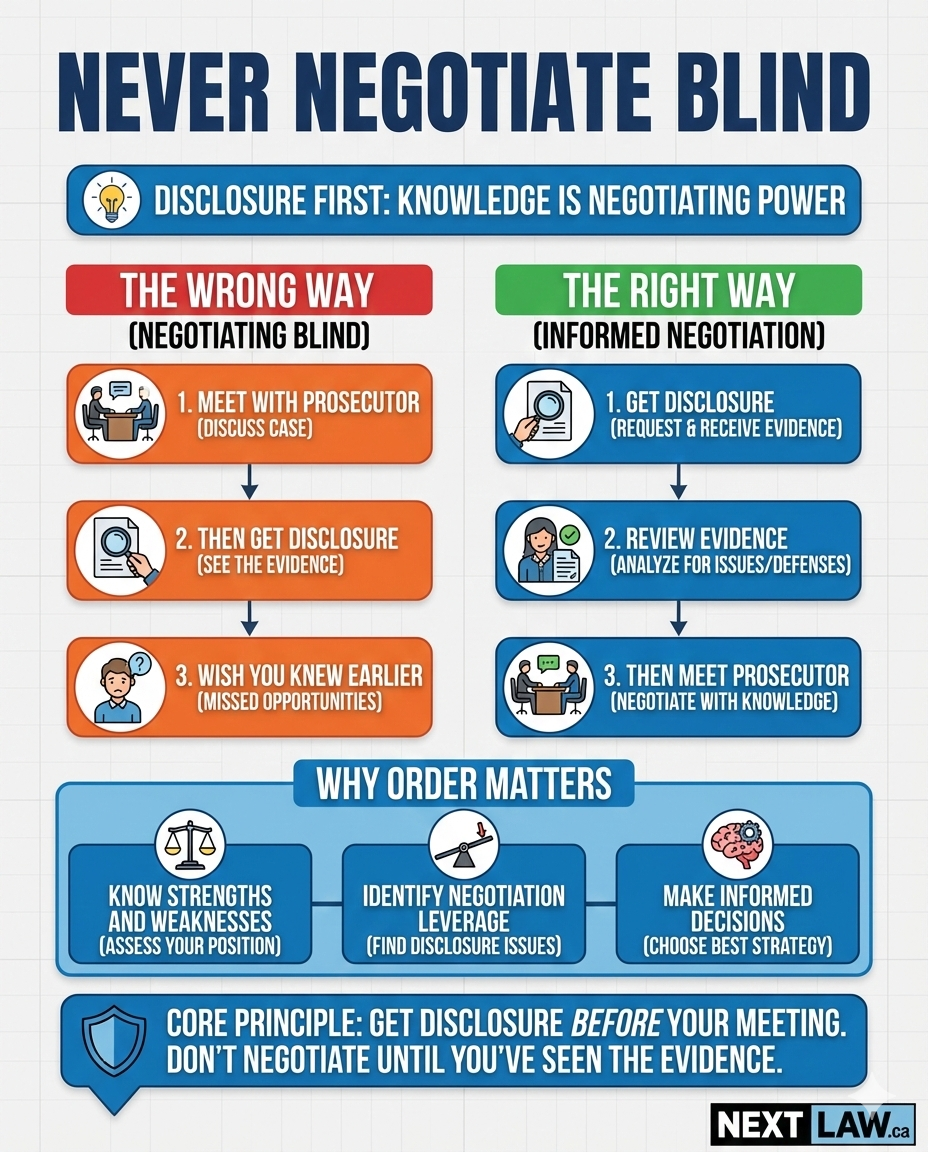
- File your intention to dispute within 15 days
- Request disclosure immediately after filing
- Wait to receive the disclosure package
- Review the disclosure carefully (or have it reviewed)
- Only then schedule or attend any prosecutor meeting
Rushing to negotiate defeats the purpose of fighting your ticket. Taking time to prepare properly leads to better outcomes.
What Disclosure Reveals
Before meeting with a prosecutor, disclosure helps you understand:
- The strength of the evidence – Is the calibration current? Are the officer’s notes complete? Is everything properly documented?
- Potential weaknesses – Missing documents, procedural gaps, or technical issues that could be challenged.
- What you’re actually facing – The exact circumstances of the stop and the evidence the prosecution would present at trial.
Leveraging Disclosure in Negotiations
Disclosure knowledge changes the conversation:
- If disclosure reveals problems, you can mention them. “I notice the calibration certificate appears to be expired” changes the negotiation entirely.
- If disclosure is solid, you can set realistic expectations. Strong evidence suggests focusing on the best available deal rather than holding out for dismissal.
- If disclosure is incomplete, you can request missing items before proceeding. The prosecution may realize they can’t prove their case.
Prosecutors Know When You’re Unprepared
Prosecutors can tell when defendants haven’t reviewed disclosure. Questions about evidence, specific references to documentation, and informed positions all signal preparation. Vague requests for “whatever deal you can give me” signal the opposite.
Prepared defendants tend to get better outcomes because prosecutors recognize they’ll need to work harder to get convictions.
Sustained Pressure Strategy
NextLaw uses a strategy called sustained pressure that leverages disclosure strategically. Rather than accepting the first prosecutor offer at early resolution, we request disclosure and use what it reveals to create negotiation leverage. We opt for trial if the initial offer isn’t compelling—not because we want a trial, but because courts rarely do. By requesting disclosure repeatedly and building system friction, pressure accumulates. At the trial date, there’s a 5–10% chance the officer doesn’t show (immediate dismissal). If the officer does show, we negotiate from a position of strength because the prosecutor wants to clear the case.
This strategy only works if you’ve reviewed disclosure and understand what you’re working with.
Making an Informed Choice
The evidence in your case determines what outcomes are realistic and what leverage you have. Negotiating without knowing that evidence is negotiating blind. Request disclosure, review it carefully, and then—and only then—engage in resolution discussions. Not every ticket is worth fighting—but every ticket is worth checking. Book a free call to review your disclosure and discuss options.
Frequently Asked Questions
Should I get disclosure before meeting the prosecutor?
Yes, always. The prosecutor has seen all the evidence; you have only seen the ticket. Negotiating without disclosure means you cannot spot weaknesses that give you leverage or set realistic expectations.
What is the right order for fighting a speeding ticket?
File your intention to dispute within 15 days, request disclosure immediately, wait for and review the package, and only then attend any prosecutor or early resolution meeting.
How does disclosure help me negotiate with the prosecutor?
If it reveals problems — an expired calibration certificate, incomplete notes — you can raise them and shift the negotiation. If it is solid, you can set realistic expectations instead of holding out for a dismissal.
Can prosecutors tell if I have not reviewed disclosure?
Yes. Specific, evidence-based questions signal preparation; a vague request for whatever deal they can give signals the opposite. Prepared defendants tend to get better outcomes.
What if the disclosure I receive is incomplete?
You can request the missing items before proceeding. If the prosecution cannot produce complete records, they may not be able to prove their case.
Real Speeding Ticket Result
“I had a great experience working with NEXTLAW. Jon and Dan have a simple and consistent approach to their cases, and they communicated honestly with me every step of the way. The outcome in my case was even better than I anticipated.” — T. Dizzle, NextLaw client (verified 5-star Google review #214)
Talk to a Speeding Ticket Law Firm
NextLaw is a law firm that focuses on fighting Ontario speeding tickets to protect your insurance. Before you meet a prosecutor, a free 15-minute call can make sure you go in prepared. Book a free call with NextLaw or explore our free tools.
This article is based on NextLaw’s professional analysis of Ontario speeding legal procedures and is provided for informational purposes only. Every case presents unique circumstances, and outcomes depend on specific case facts and proper legal representation.

