
The Officer No-Show Myth: Why You Need a Real Defense
Bottom line: The officer not showing up is real but rare—about a 5–10% chance—so it’s a bonus, not a plan. A real defence comes from disclosure and trial pressure. You have 15 days to respond, and NextLaw reviews your ticket for free.
If you’ve decided to fight your speeding ticket, you might have heard that officers often don’t show up for court and cases get dismissed. This is one of the most persistent—and dangerous—myths about fighting traffic tickets.
The Reality: Officers Usually Appear
In the vast majority of cases, officers do appear for trial. Estimates suggest officers show up 85–95% of the time when cases proceed to trial.
Building your defense strategy around hoping the officer won’t appear is not a strategy at all—it’s wishful thinking that usually leads to conviction.
Why Officers Typically Appear
Several reasons officers usually attend:
- Court attendance is part of their job. Officers are scheduled for court days as part of their duties. Appearing for traffic cases is expected and compensated.
- Multiple cases are grouped together. Courts schedule traffic matters for specific days. An officer might have several cases on the same date, making attendance efficient.
- Consequences for repeated no-shows. Officers who consistently fail to appear can face professional repercussions. Most take their court obligations seriously.
What Happens If the Officer Doesn’t Appear
When an officer is unexpectedly absent, the court has options:
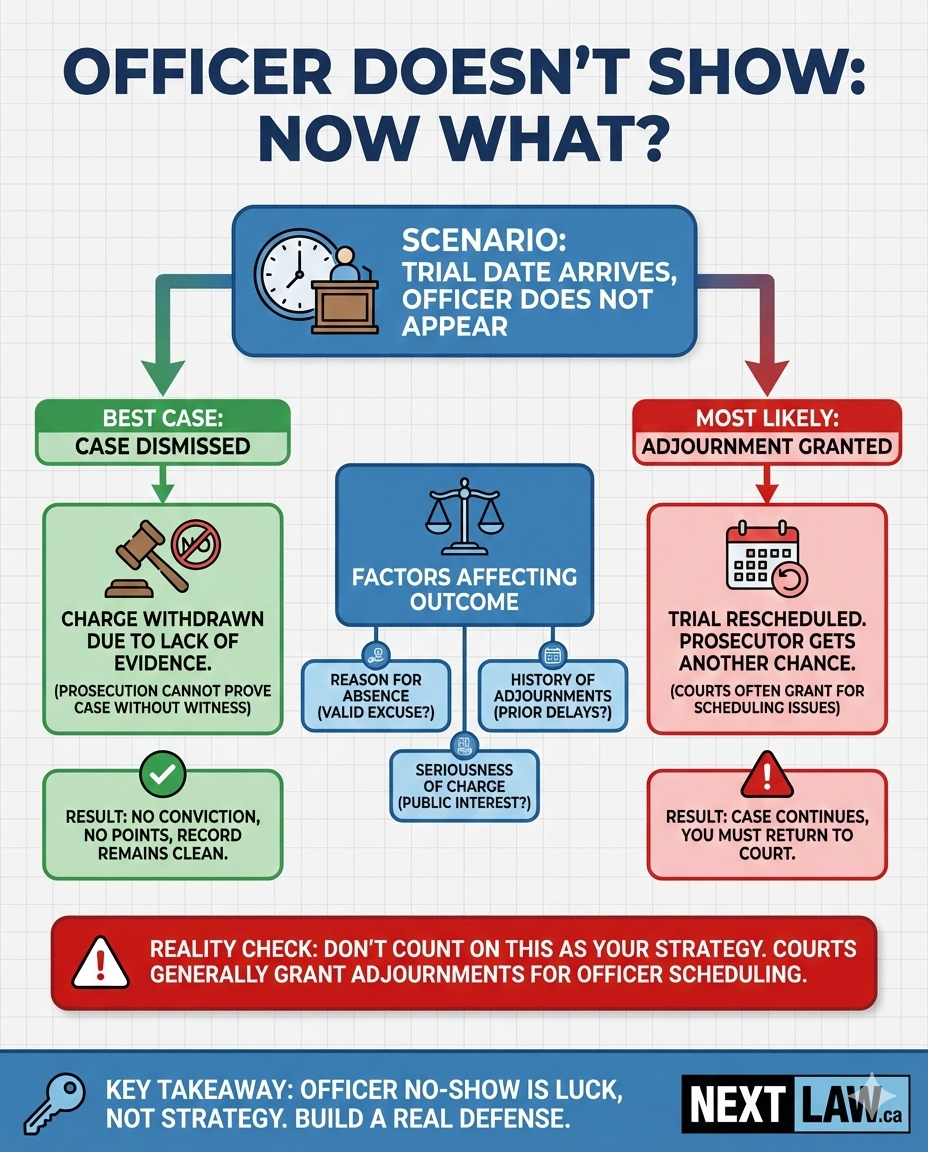
- Adjournment: The most common outcome. The court reschedules your case for another date. You get another court appearance, but no resolution.
- Dismissal: Possible, but not guaranteed. The court may dismiss if the officer has failed to appear previously or if there’s no reasonable explanation for the absence.
Courts are often willing to grant adjournments to the prosecution, especially for first-time officer absences. Counting on dismissal is unrealistic.
The Problem with the No-Show Strategy
Defendants who rely on officer no-shows often:
- Don’t prepare a real defense. Why analyze disclosure or prepare cross-examination if you’re just hoping for a no-show?
- Get caught unprepared when the officer appears. Then they’re facing trial with no strategy.
- Waste multiple court dates. If the first date is adjourned, they show up again hoping for another no-show.
- Eventually lose. When the officer does appear—and they usually do—the unprepared defendant gets convicted.
What You Should Do Instead
Treat every court date as if the officer will appear—because they probably will:
- Request and review disclosure. Identify potential weaknesses in the prosecution’s case.
- Prepare questions for cross-examination. Know what you’ll ask to challenge the evidence.
- Understand the technical requirements. Calibration, training, procedures—know what the prosecution must prove.
- Build a real defense. Give yourself a chance to win on the merits.
Sustained Pressure Strategy
Rather than relying on no-shows, NextLaw uses a strategy called sustained pressure. We request disclosure repeatedly, building system friction. Pressure accumulates. At the trial date, there’s a 5–10% chance the officer doesn’t show (immediate dismissal). If they do show, we negotiate from a position of strength because the prosecutor wants to clear the case. But the foundation is always preparation: thorough disclosure analysis and evidence-based defense, not hope.
The Insurance Stakes at Trial
What happens at trial directly determines your insurance costs for the next three to six years. A 15 km/h over conviction costs $510–$1,200 over three years in insurance increases. A 30+ km/h over conviction costs $1,785–$4,335 over three years. A complete dismissal at trial means those costs are $0. This insurance reality is why trial preparation and evidence-based defense matter so much—the financial difference between conviction and acquittal extends far beyond the courtroom.
Hope Is Not a Strategy
The officer might not show up. But counting on it is foolish. Prepare a real defense, and treat officer absence as an unexpected bonus rather than your primary plan. Not every ticket is worth fighting—but every ticket is worth checking. Book a free call to review your disclosure and build a real defense strategy.
Frequently Asked Questions
Will the officer really not show up to my trial?
Sometimes, but not usually — realistically a 5–10% chance. Betting on a no-show is not a strategy; it’s one of several ways a case can break your way.
Should I request a trial hoping the officer doesn’t appear?
Electing trial is worthwhile, but for the right reasons: it lets us request disclosure and build pressure. The no-show is a bonus, not the plan.
What happens if the officer does show up?
We negotiate from a position of strength, because the prosecutor wants to clear the case — which is why sustained pressure works whether or not the officer appears.
Is the officer no-show a reliable defence?
No. It’s a low-probability event. A real defence comes from disclosure review and the pressure of a trial election, not from hoping nobody shows.
Should I fight my speeding ticket?
Usually yes — but on the evidence and process, not on a no-show gamble. A free review tells you what your ticket is actually worth fighting.
A Real Speeding Ticket Result
“I was charged with speeding ticket 67over the limit on a g2 license. They got it down to 29 and no suspension. Happy with the outcome. Overall, don’t drive fast, its not worth the hastle.”
— Vijay Dhanda, verified 5-star Google review
Talk to NextLaw
If you’ve been charged with speeding, get your ticket reviewed so you know your real options. Secure your free NextLaw speeding callback and we’ll explain your options and whether fighting makes sense.
Insurance figures above are estimates based on Ontario insurer filings; your actual increase depends on your insurer, history, and policy.
This article is based on NextLaw’s professional analysis of Ontario speeding legal procedures and is provided for informational purposes only. Every case presents unique circumstances, and outcomes depend on specific case facts and proper legal representation.

