
The Officer Was Rude: Why It Doesn’t Help Your Speeding Ticket Case
Bottom line: A rude officer is not a defence on its own, but how your stop was handled can still matter to the evidence. You have 15 days to respond, and many tickets are worth fighting. NextLaw reviews your ticket for free.
If the officer who issued your speeding ticket was rude, unprofessional, or made you feel unfairly treated, you might think this matters for your case. While such behavior is frustrating, it rarely affects the legal outcome of your ticket.
What Courts Care About vs. What They Don’t
Jon Cohen, who has seen countless defendants bring up officer conduct, explains the disconnect:
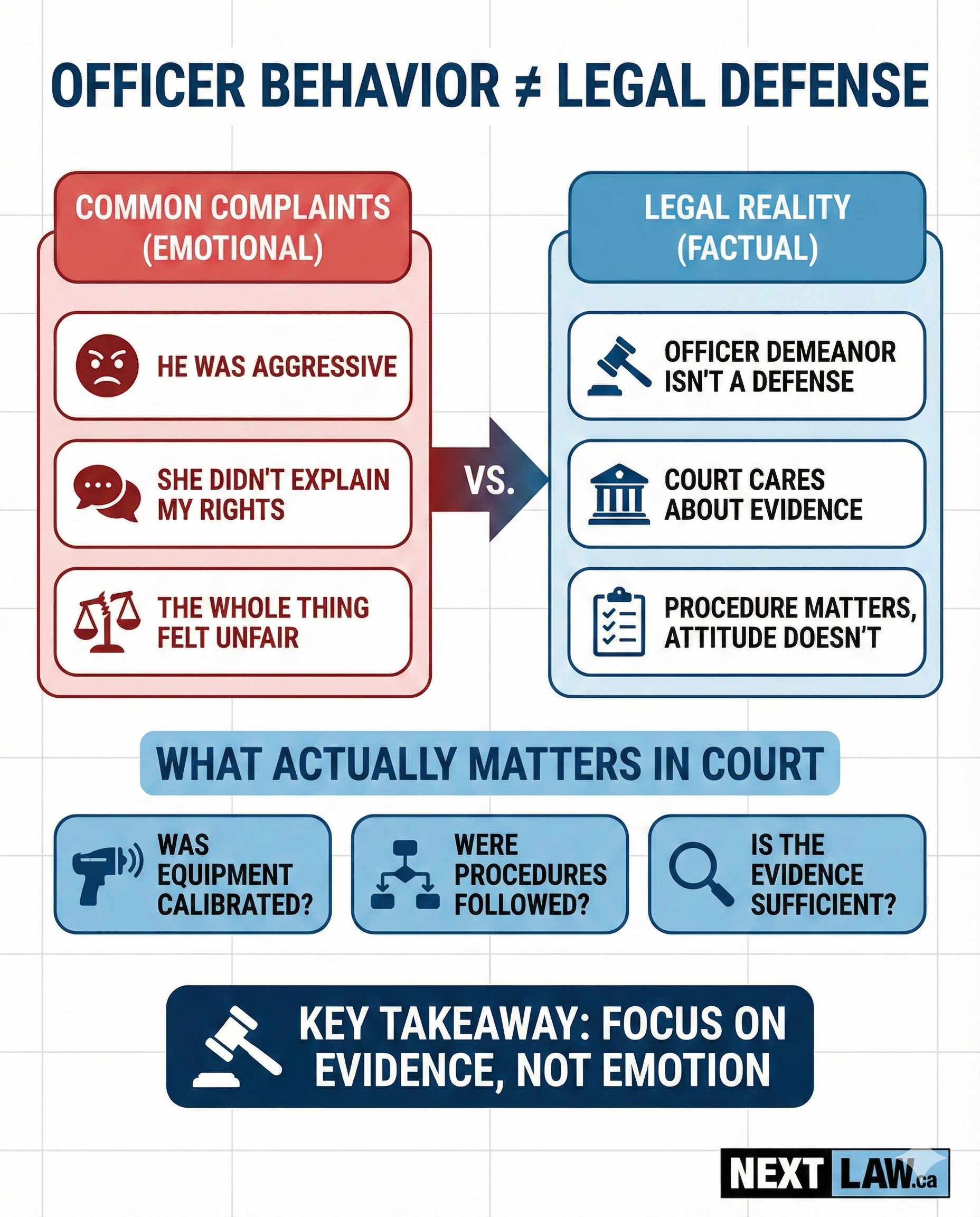
The court’s job is to determine whether the prosecution can prove you were speeding at the alleged speed. That’s a factual and legal question. The officer’s demeanor—however unpleasant—doesn’t change the radar reading.
What Doesn’t Matter
- The officer was rude or dismissive
- The officer seemed to be targeting certain drivers
- The officer didn’t explain your options adequately
- The officer made you feel disrespected
- You felt the stop was unfair
What Does Matter
- Was the speed measurement device properly calibrated?
- Was the officer properly trained to operate it?
- Was your vehicle correctly identified as the one measured?
- Were proper procedures followed?
- Does the evidence actually prove the alleged speed?
Why Officer Conduct Usually Doesn’t Help
Dan Joffe, traffic lawyer at NextLaw, explains the practical reality:
- Being rude isn’t illegal. Officers can be brusque, dismissive, or unpleasant without violating any law or procedure that would affect your case.
- It doesn’t create reasonable doubt. The question is whether you were speeding, not whether the officer was polite about catching you.
- Courts see it constantly. Justices hear complaints about officer conduct daily. It’s not compelling or unusual.
When Officer Conduct Might Matter
Jon Cohen notes rare exceptions where officer behavior could be relevant:
- If the conduct rises to misconduct. Falsifying evidence, lying under oath, or violating your rights is different from being rude. These are serious matters that can affect cases.
- If it affects the evidence. An officer who was so distracted by arguing with you that they might have misread the device—that’s an evidence question.
But simply being rude? That’s a complaint to file with the police service, not a defense to your ticket.
What to Focus on Instead
Dan Joffe recommends redirecting your energy to things that actually matter:
- The calibration records. Were they current and complete?
- The officer’s notes. Are they accurate and consistent?
- The targeting. Was your vehicle properly identified?
- The procedures. Were required steps followed?
These are the issues that create reasonable doubt—not hurt feelings.
Venting vs. Defending
Jon Cohen understands the urge to complain about unfair treatment. It’s frustrating to feel disrespected. But court isn’t the venue for venting—it’s the venue for challenging evidence. Mixing the two undermines your case.
If you want to address officer conduct, file a complaint with the police service. If you want to fight your ticket, focus on the evidence.
Insurance Impact: What Actually Determines Your Cost
While officer conduct at the roadside may feel important, the insurance impact is clear: it’s the conviction itself, not how you were treated, that determines your financial outcome. A conviction costs:
- 1–15 km/h over (0 demerit points): $510–$1,200 over three years
- 16–29 km/h over (3 demerit points): Same as above for most insurers
- 30–49 km/h over (4 demerit points): $1,785–$4,335 over three years
On average Ontario premiums of $2,500, a conviction can cost up to $1,875 in insurance surcharges over three years. Focusing your defense effort on evidence and legal procedure—rather than officer behavior—is what protects your insurance rates.
NextLaw Client Success
“I was charged with speeding ticket 67 over the limit on a G2 license. They got it down to 29 and no suspension. Happy with the outcome.” — Vijay Dhanda, NextLaw Client
Focus on What Wins Cases
The officer’s rudeness is frustrating but legally irrelevant. Effective defense focuses on evidence, procedure, and reasonable doubt—not on relitigating how you were treated at the roadside. Channel your energy into arguments that actually help your case.
Frequently Asked Questions
The officer was rude — can I get my ticket thrown out for that?
Usually not on its own. Rudeness is not a defence, but how the stop was conducted can still matter to the evidence, which is why a review is worth it.
Does the officer’s attitude affect my case?
Not directly. Courts decide on the evidence — the speed measurement, the officer’s notes, disclosure — not on politeness. That’s where a real defence is built.
Should I complain about the officer instead of fighting the ticket?
A complaint and your ticket are separate. Fighting the ticket on the evidence is what actually protects your record and insurance.
What actually gets a speeding ticket reduced or dismissed?
Gaps in the evidence, disclosure problems, and the officer not appearing at trial — not the officer’s demeanour. We apply sustained pressure to surface those.
Should I fight the ticket?
Usually yes. Regardless of how you were treated, a conviction costs points and years of higher insurance, and a review tells you whether fighting makes sense.
A Real Speeding Ticket Result
“I had a great experience working with NEXTLAW. Jon and Dan have a simple and consistent approach to their cases. Their professionalism was top-notch, and they communicated honestly with me every step of the way, making the entire process more reassuring. The outcome in my case was even better than I anticipated, and I’m extremely pleased with the result.”
— T dizzle, verified 5-star Google review
Talk to NextLaw
If you were treated badly at your stop and charged with speeding, get your ticket reviewed on the evidence. Secure your free NextLaw speeding callback and we’ll explain your options and whether fighting makes sense.
Insurance figures above are estimates based on Ontario insurer filings; your actual increase depends on your insurer, history, and policy.
This article is based on NextLaw’s professional analysis of Ontario speeding legal procedures and is provided for informational purposes only. Every case presents unique circumstances, and outcomes depend on specific case facts and proper legal representation.

