
Speeding Ticket as a Skip The Dishes Driver: Protecting Your Delivery Income
Bottom line: Skip checks your driving record, so a speeding conviction can raise your insurance and put your account—and every other delivery app you use—at risk. You have 15 days to respond, and many tickets are worth fighting. NextLaw reviews your ticket for free.
If you deliver for Skip The Dishes in Ontario and have received a speeding ticket, you need to understand how this could affect your ability to continue working on the platform. Delivery platforms including Skip check driving records—and convictions can put your account at risk.
Skip The Dishes Driver Requirements
Skip The Dishes requires drivers to have valid licenses and acceptable driving records. Like other delivery platforms, Skip conducts background checks that include driving abstract reviews.
While Skip doesn’t publish exact deactivation criteria, the company reserves the right to review and potentially deactivate accounts based on driving record concerns.
The Platform Reality for Delivery Drivers
Delivery drivers sometimes assume their work is “lower stakes” than rideshare because they’re carrying food rather than passengers. This assumption overlooks how delivery platforms actually operate.
All delivery platforms have liability concerns. Drivers who accumulate convictions or demonstrate poor driving habits represent increased risk. Platforms prefer drivers with clean records.
Multi-Platform Delivery Work
Many Skip drivers also work for DoorDash, Uber Eats, Instacart, or other platforms. All these platforms pull the same driving abstract. A conviction doesn’t just affect one app—it could affect all of them.
If you’re building income across multiple platforms, one speeding conviction creates risk across your entire gig economy portfolio.
The Delivery Driver’s Calculation
For Skip drivers, the financial calculation includes:
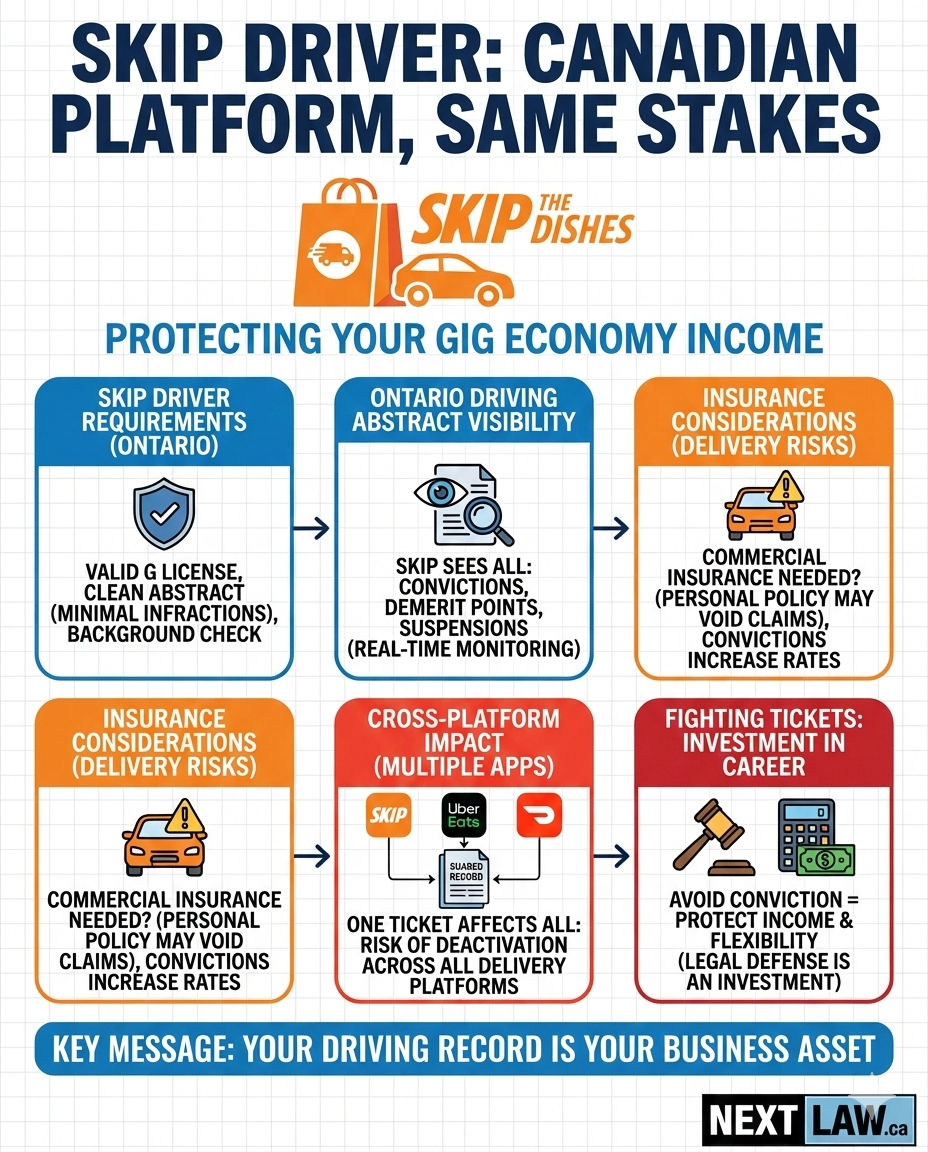
- The immediate fine (often $100-300)
- Insurance increases that reduce your per-delivery earnings. A minor speeding conviction (1–15 km/h over) costs $510–$1,200 over three years.
- Platform risk that could eliminate this income source
- Cross-platform effects on other delivery apps
Fighting a ticket costs less than most drivers expect, especially compared to the potential income loss from conviction.
Should You Fight the Ticket?
Yes. Don’t simply pay to “get it over with.” That conviction stays on your record for years and increases platform risk.
Here’s how the defense process works. We use a strategy called sustained pressure. Rather than taking the first deal offered at early resolution, we opt for trial—not because we want a trial, but because the court rarely does. We request disclosure repeatedly, creating system friction. Pressure accumulates. At the trial date, there’s a 5–10% chance the officer doesn’t show (immediate win). If the officer does show, we negotiate from a position of strength because the prosecutor wants to clear the case.
Insurance Impact: Specific Numbers
A speeding conviction stays on your driving record and affects insurance for three years. Here’s the breakdown:
- 1–15 km/h over (0 demerit points): $510–$1,200 total increase over 3 years
- 16–29 km/h over (3 demerit points): Same bracket as above for most insurers
- 30–49 km/h over (4 demerit points): $1,785–$4,335 total increase over 3 years
These aren’t guesses. They’re based on actual Ontario insurer filings.
Double Impact: Insurance and CVOR
For gig economy drivers, a speeding conviction creates a double financial hit. Your personal insurance surcharges you 10–25% for three renewal cycles. But if you drive commercially, the conviction also affects your CVOR (Commercial Vehicle Operator’s Registration) safety rating. A deteriorating CVOR can trigger platform issues or fleet insurance increases, potentially leading to deactivation.
With gig drivers already operating on thin margins, the combined insurance and CVOR impact of a speeding conviction can eliminate the financial viability of driving for income.
Your Record Affects All Your Platforms
As a Skip The Dishes driver, your driving record is a professional credential that affects your ability to earn across all delivery platforms. A speeding ticket puts that credential at risk. Not every ticket is worth fighting—but every ticket is worth checking.
Book a free call with NextLaw. We’ll review your ticket, explain your options, and let you know whether fighting makes sense for your situation.
Frequently Asked Questions
Does Skip The Dishes check driving records?
Yes. Skip requires a valid licence and an acceptable record, and runs background checks that include a driving-abstract review; it reserves the right to review or deactivate accounts over record concerns.
Can a speeding ticket affect my Skip account?
It can. Accumulated convictions or poor driving habits represent risk platforms prefer to avoid, and can put your account under review.
Does a Skip ticket affect other delivery apps?
It can. DoorDash, Uber Eats, Instacart and Skip all pull the same driving abstract, so one conviction can affect your whole gig portfolio.
How much does a speeding conviction cost a delivery driver?
An estimated $510–$1,200 over three years for a minor conviction, up to $1,785–$4,335 for 30–49 km/h over, plus any CVOR impact if you drive commercially.
Should a Skip driver fight a speeding ticket?
Usually yes. Fighting costs less than most drivers expect and, unlike paying, a dismissal keeps the conviction off the abstract every platform checks.
A Real Speeding Ticket Result
“Was looking at a 6 month suspension as well as fines, but they got the charges dropped to no licence, which is a $1000 fine and no suspension! Great work guys, thank you so much.”
— Mike Willet, verified 5-star Google review
Talk to NextLaw
If you deliver for Skip and you’ve been charged with speeding, get your ticket reviewed before you decide anything. Secure your free NextLaw speeding callback and we’ll explain your options and whether fighting makes sense.
Insurance figures above are estimates based on Ontario insurer filings; your actual increase depends on your insurer, history, and policy.
This article is based on NextLaw’s professional analysis of Ontario speeding procedures and is provided for informational purposes only. Every case presents unique circumstances, and outcomes depend on specific case facts and proper legal representation.

