

Court Perspective: You’re the Defendant, Not the Victim
Bottom line: In court you’re the defendant, not the victim, and that mindset wins cases—on evidence and process, not on how unfair the stop felt. You have 15 days to respond, and NextLaw reviews your ticket for free.
If you’re fighting a speeding ticket, it’s important to understand how the court views your situation. One of the most common mistakes defendants make is approaching court as if they’re victims of unfair treatment—when the court sees them simply as people charged with violating traffic law.
The Court’s Starting Point
Jon Cohen, who has observed countless traffic court proceedings, explains the perspective that shapes every case:
The prosecution has charged you with speeding. They have evidence—a radar or lidar reading, an officer’s testimony. The court’s job is to determine whether that evidence proves the charge beyond reasonable doubt.
Notice what’s not in that description: whether the charge is fair, whether you deserve sympathy, whether enforcement priorities make sense, or whether you feel victimized by the process.
Why “Victim” Framing Fails
Dan Joffe, traffic lawyer at NextLaw, identifies how victim thinking undermines cases:
- “The speed limit was too low.” Maybe, but that’s a legislative issue—not a defense to the charge.
- “Everyone else was speeding too.” Selective enforcement complaints don’t change whether you were speeding.
- “The officer was just filling a quota.” Even if true, it doesn’t affect the radar reading.
- “This is just a money grab.” The court’s job is applying the law, not evaluating government revenue policy.
These arguments treat you as a victim of unfair systems. The court treats you as a defendant who may or may not have violated the law.
The Defendant’s Actual Position
Jon Cohen offers a clearer framing:
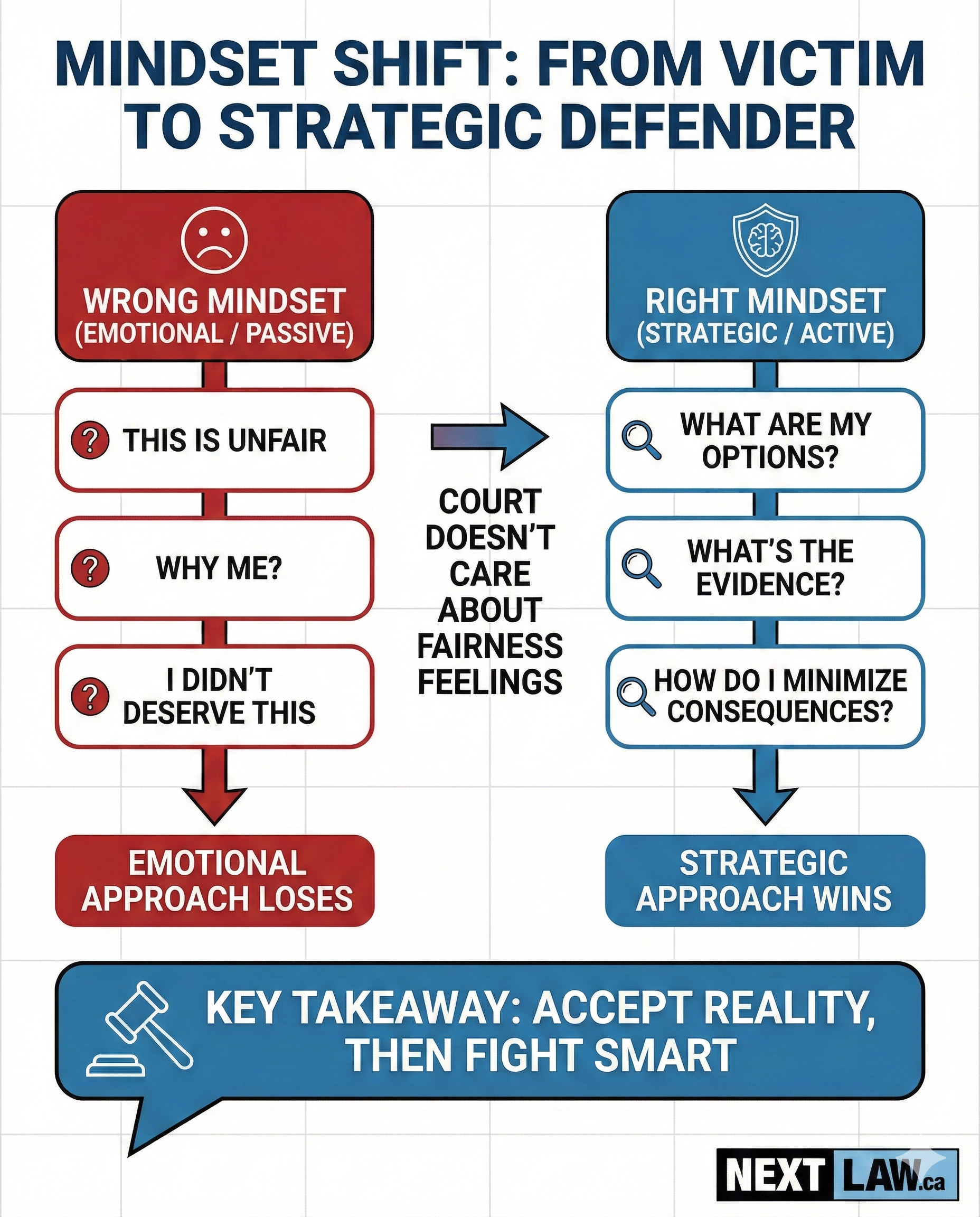
As a defendant, your position is that the prosecution cannot prove the charge beyond reasonable doubt. This might be because the evidence is weak, procedures weren’t followed, equipment wasn’t properly calibrated, or the officer can’t establish the speed reliably.
This is fundamentally different from arguing that you shouldn’t be charged in the first place. The charge exists. The question is whether it can be proven.
Effective Defense Mindset
Dan Joffe recommends approaching your case with these principles:
- Accept the situation. You’ve been charged. That’s the starting point.
- Focus on evidence. What does the prosecution have? Where are the weaknesses?
- Challenge specifically. Ask questions that create doubt about the speed measurement, the targeting, the procedures.
- Stay professional. Courts respond better to defendants who engage seriously with the evidence than those who complain about fairness.
What Actually Works
Jon Cohen contrasts ineffective victim framing with effective defense:
- Ineffective: “It’s not fair that I got pulled over when everyone was going the same speed.”
Effective: “The officer’s notes don’t clearly establish which vehicle was measured in this multi-lane traffic.” - Ineffective: “The speed limit on that road is unreasonably low.”
Effective: “The calibration certificate expired three days before this ticket was issued.” - Ineffective: “I’m a good driver who doesn’t deserve this.”
Effective: “The disclosure shows no documentation of the required pre-shift tuning fork test.”
Insurance Impact: What the Court Doesn’t Consider
While fairness or officer conduct may feel important to you, the insurance impact depends entirely on one thing: the conviction. Here’s what a conviction costs:
- 1–15 km/h over (0 demerit points): $510–$1,200 over three years
- 16–29 km/h over (3 demerit points): Same as above for most insurers
- 30–49 km/h over (4 demerit points): $1,785–$4,335 over three years
On average Ontario premiums of $2,500, a conviction can cost up to $1,875 in insurance surcharges over three years. Focusing your defense on evidence and legal procedure—not on fairness arguments—is what actually protects your insurance rates.
NextLaw Client Success
“The time, effort, and commitment they invested were far beyond what I expected. I cannot thank them enough for their support during one of the most stressful periods of my life.” — Khushbu Bhambhwani, NextLaw Client
Approach Court as a Defendant, Not a Victim
The most effective defendants understand their role. They’re not fighting against unfairness—they’re challenging whether the prosecution can prove a specific charge with specific evidence. This mindset leads to focused, effective defense strategies.
Frequently Asked Questions
Am I the victim if I got a speeding ticket unfairly?
In court you’re the defendant, not the victim — and that mindset matters. Cases are won on evidence and process, not on how unfair the stop felt.
Does feeling wronged help my case?
No. The court decides on the speed measurement, the officer’s notes, and disclosure. Channel the frustration into a disclosure-based defence instead.
What’s the right way to approach fighting a ticket?
Treat it as a defendant would: get disclosure, find the gaps, and apply pressure through a trial election — not as a grievance to air.
What actually gets a ticket reduced or dismissed?
Evidence and process problems and the officer’s non-appearance — not the unfairness of the stop. Sustained pressure is how we surface them.
Should I fight the ticket?
Usually yes. A conviction costs points and years of higher insurance; a free review tells you whether fighting makes sense for your situation.
A Real Speeding Ticket Result
“The best decision you can make when needing a lawyer is NextLaw, I didn’t have to take time off work to appear in court, I was updated on my case when needed, Instead of loosing my license and points as well as large ticket, I left with only having to pay a much smaller amount.”
— Michael Anderson, verified 5-star Google review
Talk to NextLaw
If you’ve been charged with speeding, get your ticket reviewed and approach it as a defendant would. Secure your free NextLaw speeding callback and we’ll explain your options and whether fighting makes sense.
Insurance figures above are estimates based on Ontario insurer filings; your actual increase depends on your insurer, history, and policy.
This article is based on NextLaw’s professional analysis of Ontario speeding legal procedures and is provided for informational purposes only. Every case presents unique circumstances, and outcomes depend on specific case facts and proper legal representation.

