

Written by Jon Cohen, Partner at NextLaw — a speeding ticket law firm based in Toronto, representing drivers in every court in Ontario.
Published August 17, 2026 · Last updated August 17, 2026 · Current as of the most recent Ontario Court of Justice Provincial Offences Court Statistics (FY2026) and the Provincial Offences Act in force in 2026.
For most Ontario speeding tickets, you don’t strictly need a lawyer or paralegal — you have the right to fight the ticket yourself, for free. Here’s the catch almost no one mentions: the most common way drivers end up convicted isn’t losing in court — it’s paying the fine. Under Ontario’s Provincial Offences Act, paying a ticket is an automatic guilty plea. So the real question isn’t “lawyer or paralegal.” It’s whether what a conviction could do to your insurance is worth more than the fee. Sometimes it is. Sometimes it isn’t. And sometimes people call us too late.
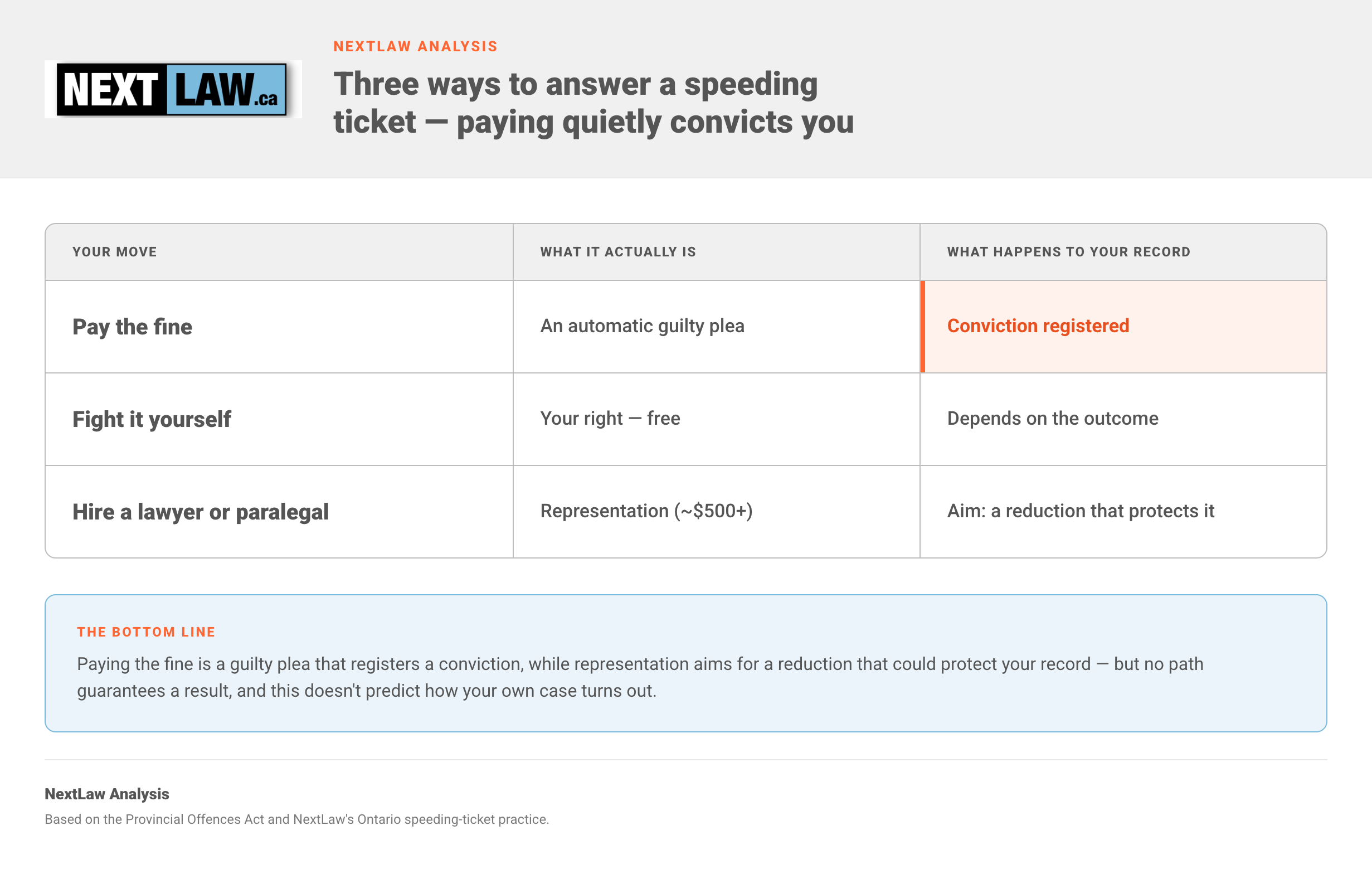

Is it worth fighting a speeding ticket in Ontario?
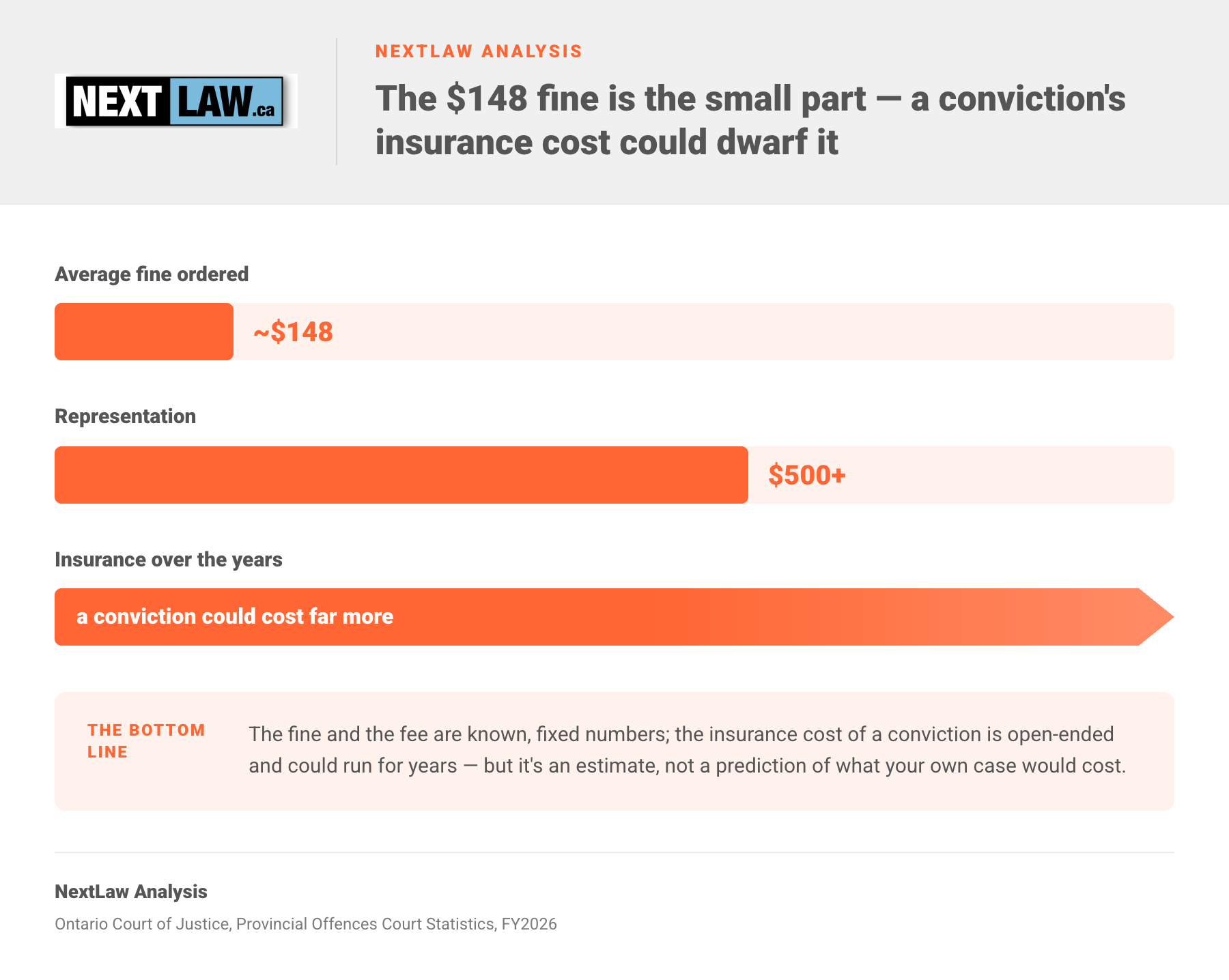
Often, yes — but rarely for the reason people expect. The fine is almost never the expensive part. The most recent Ontario Court of Justice data puts the average speeding fine ordered at about $148. Proper representation — a lawyer or a paralegal — may run you $500 or more. On paper the fee is bigger than the fine, and that’s exactly where most people stop, pay the ticket, and move on.
But the fine isn’t the point. Paying it is a conviction — and a conviction could affect your insurance for years, often far more than the fine itself. That’s the reframe: for the right ticket, hiring help isn’t a second fine, it’s an investment against a much larger insurance cost. On a minor ticket with a clean record, that math may not favour hiring anyone. On a bigger charge, it often does.
Paying the fine is the most common way drivers get convicted
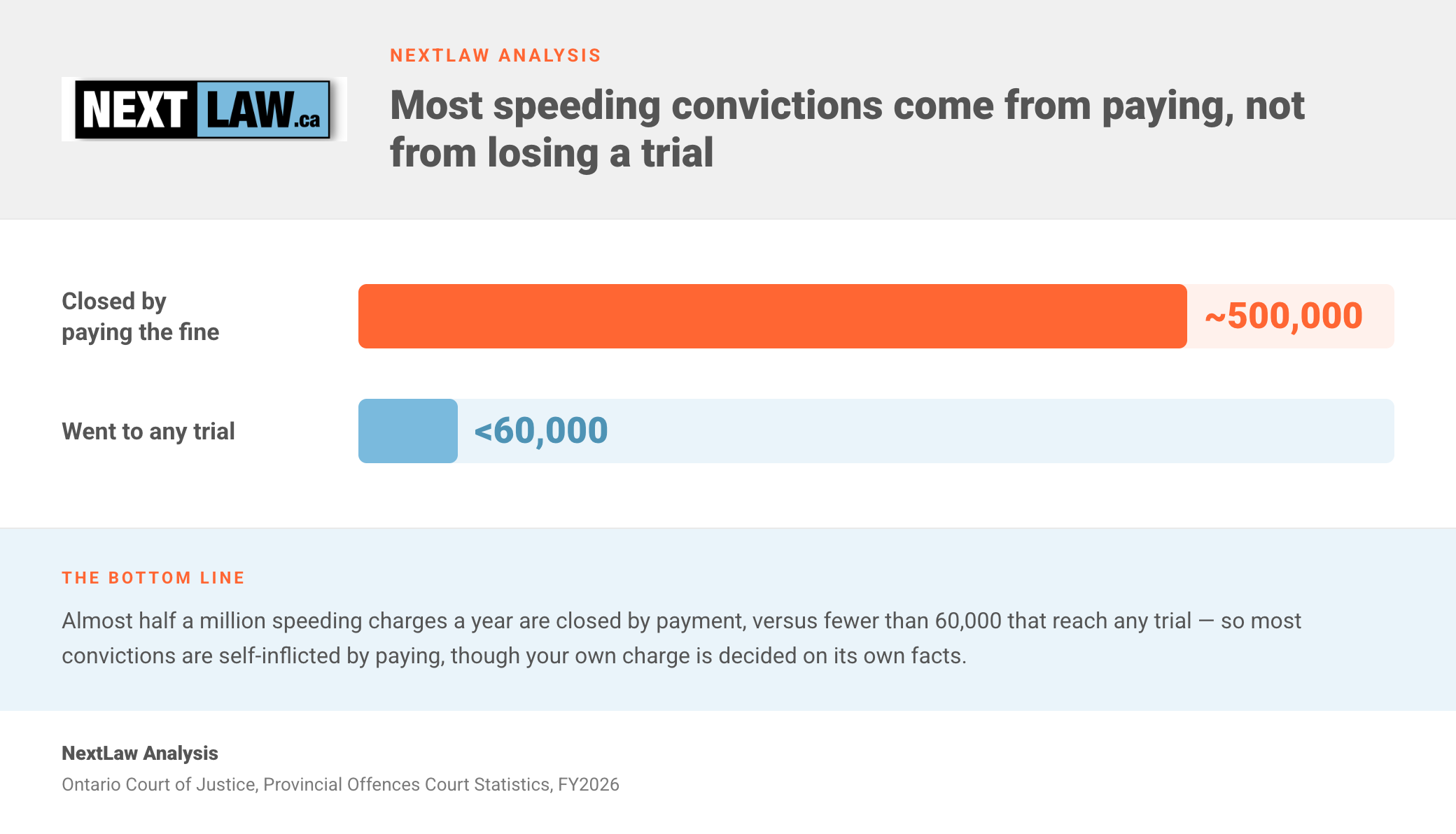
In Ontario, the most common reason drivers get a speeding conviction isn’t a loss at trial — it’s prepayment, because paying the fine is an automatic guilty plea under the Provincial Offences Act. The scale is lopsided. The most recent Ontario Court of Justice data shows almost half a million speeding charges closed by payment in a single year, versus fewer than 60,000 that went to any kind of trial. So the real risk isn’t fighting your ticket and losing. It’s paying it — and convicting yourself without a second look.
How do you get a speeding ticket dismissed in Ontario?
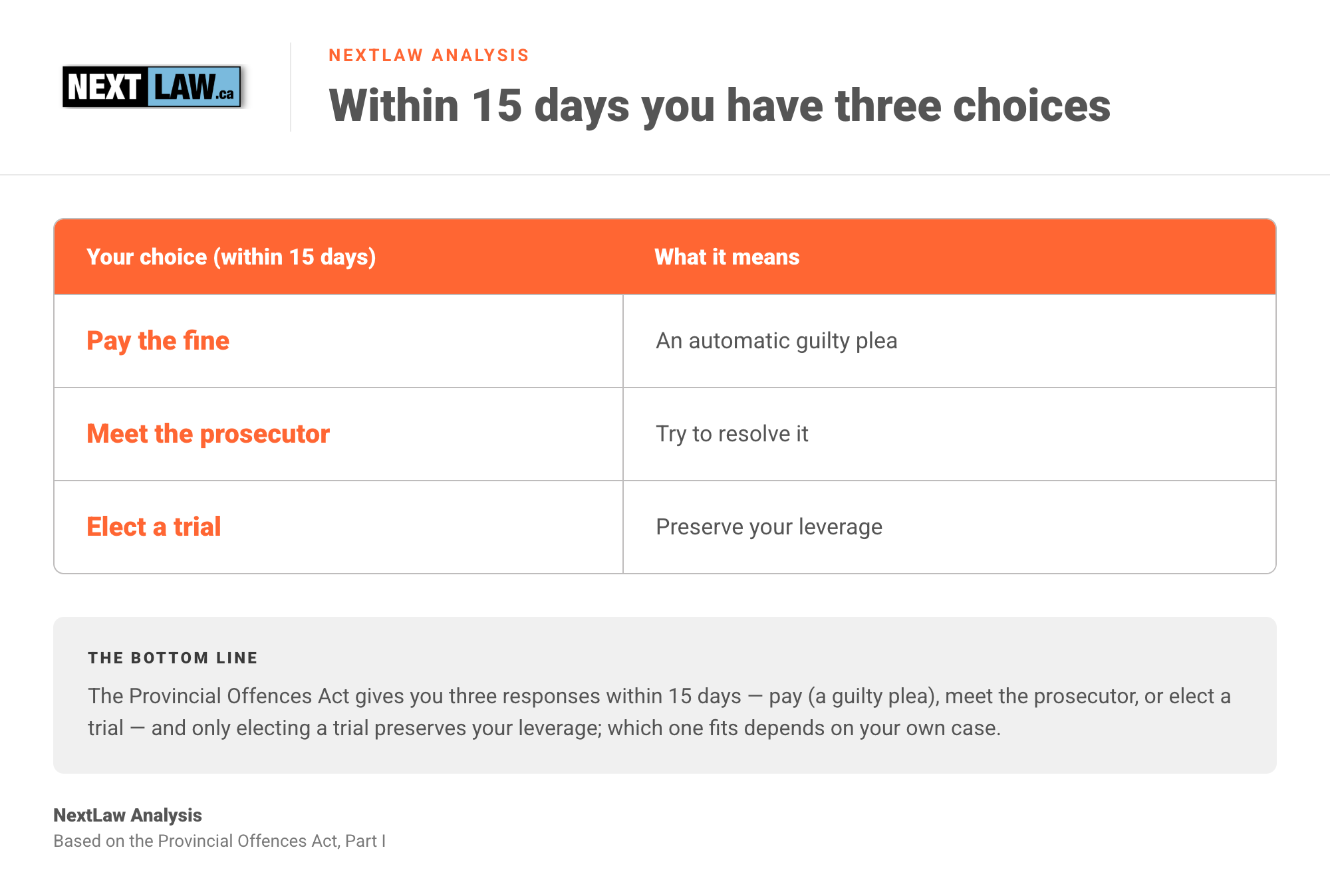
A full dismissal is the rare outcome, not the one to plan around. Under Ontario’s Provincial Offences Act you have three choices within 15 days of a speeding ticket: pay it, which is a guilty plea; meet the prosecutor to try to resolve it; or elect a trial. That’s the rule. Whether it’s even worth contesting depends on something no ticket-defence ad mentions: your courthouse.
Your courthouse changes the odds more than the ticket does
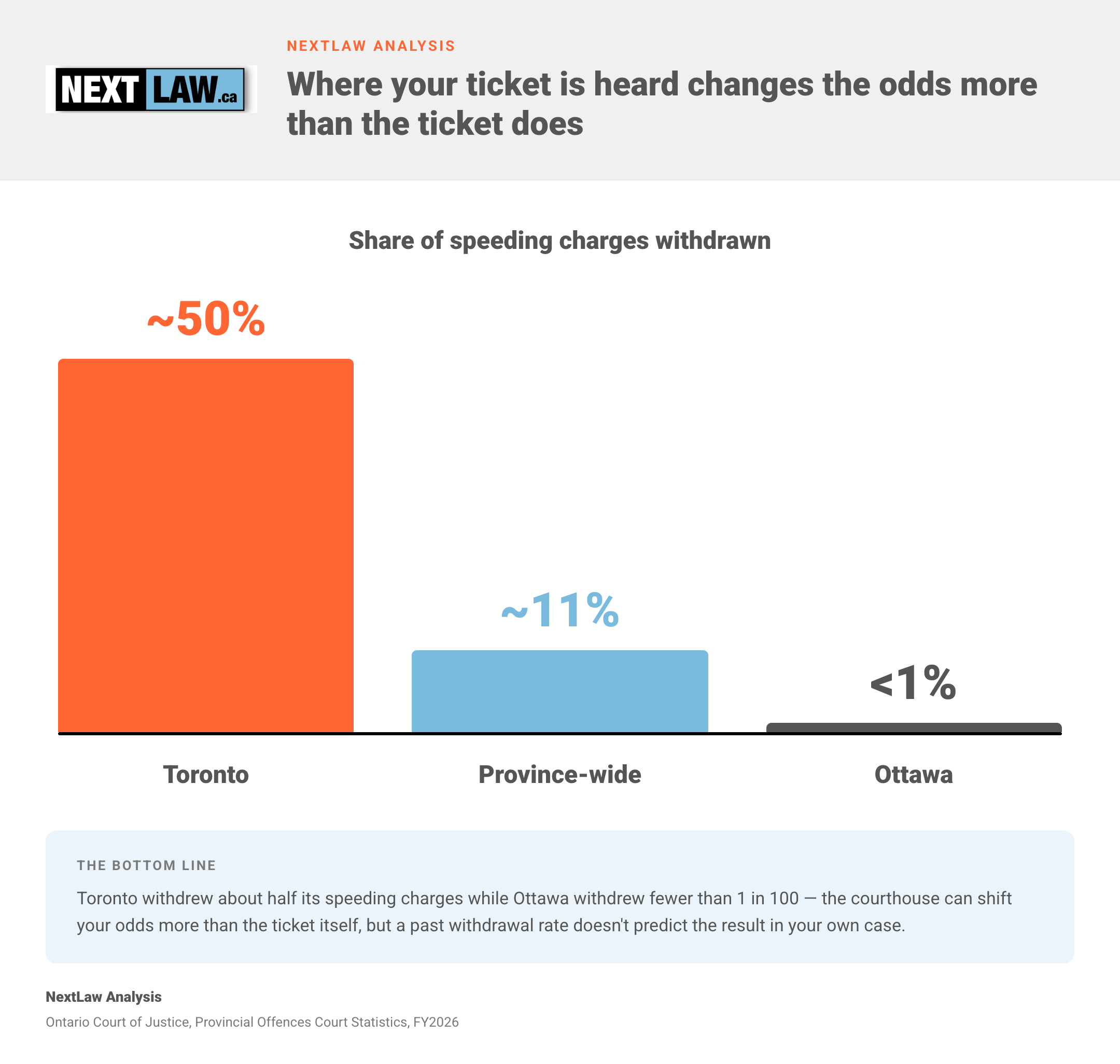
Same ticket, different city, completely different odds. According to NextLaw Analysis of the most recent Ontario Court of Justice data, Toronto withdrew about half of the speeding charges it finished, while Ottawa withdrew fewer than 1 in 100. Province-wide, only about 1 in 9 speeding charges is withdrawn at all. “Getting it dismissed,” then, is the wrong target. The better question is this: given your court and your speed, is the realistic outcome — usually a reduction that protects your record — worth more than the fee? On a minor ticket with a clean record, maybe not. On a bigger charge, or for a G2 driver facing Ontario’s escalating novice-driver penalties, it often is.
Do cops show up to court for speeding tickets in Ontario?
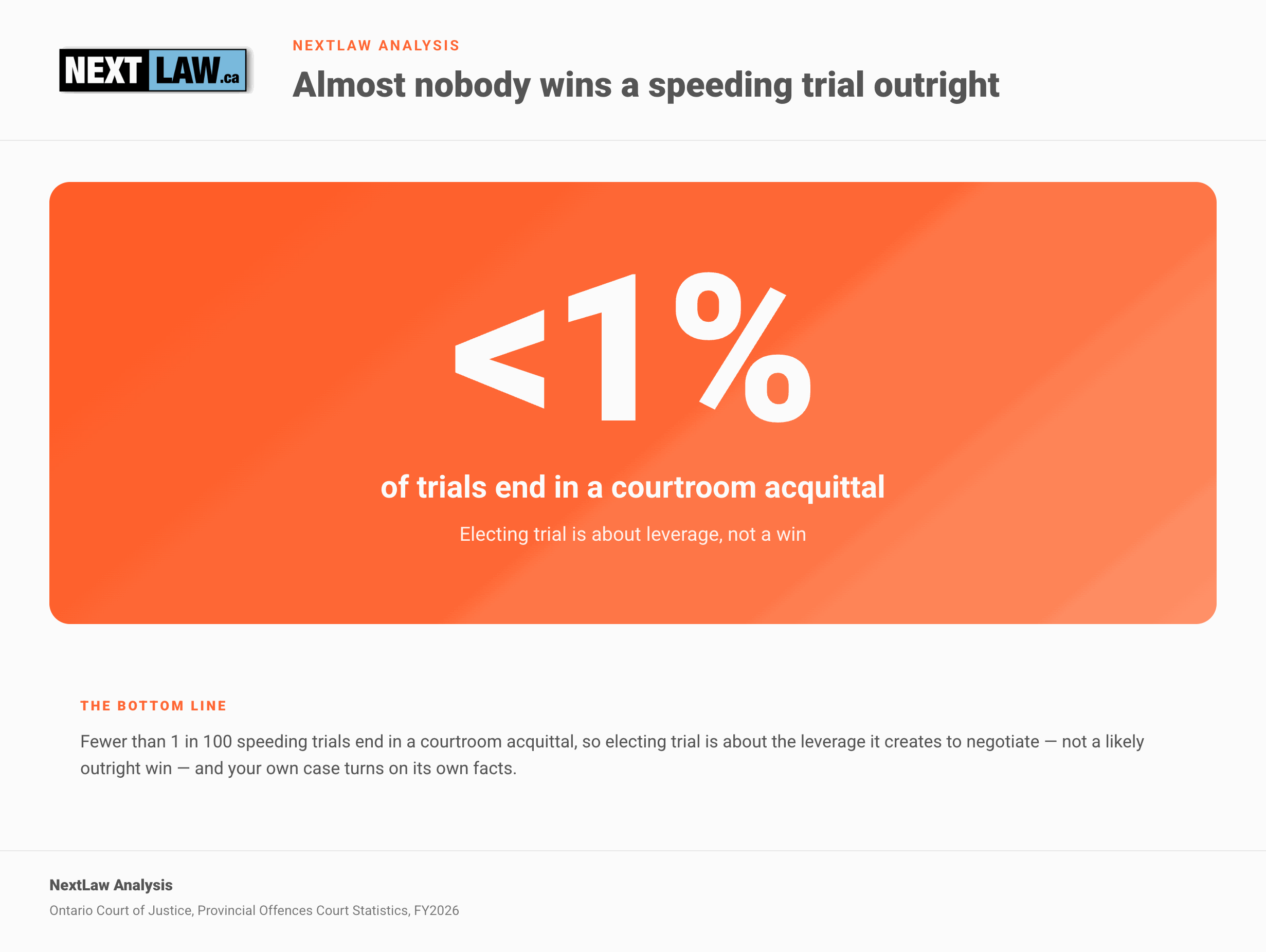
Usually, yes — and it rarely matters the way people hope. Officers are expected to attend, and sometimes they don’t, but almost nobody beats a speeding ticket because the officer didn’t show. By NextLaw Analysis of the most recent Ontario Court of Justice data, courtroom acquittals are a fraction of one percent of trials. The value of electing a trial isn’t a dramatic courtroom win — it’s leverage. Choosing trial and then getting disclosure creates the room to negotiate a withdrawal or a reduction.
The mistake we see most — giving up your leverage before you call
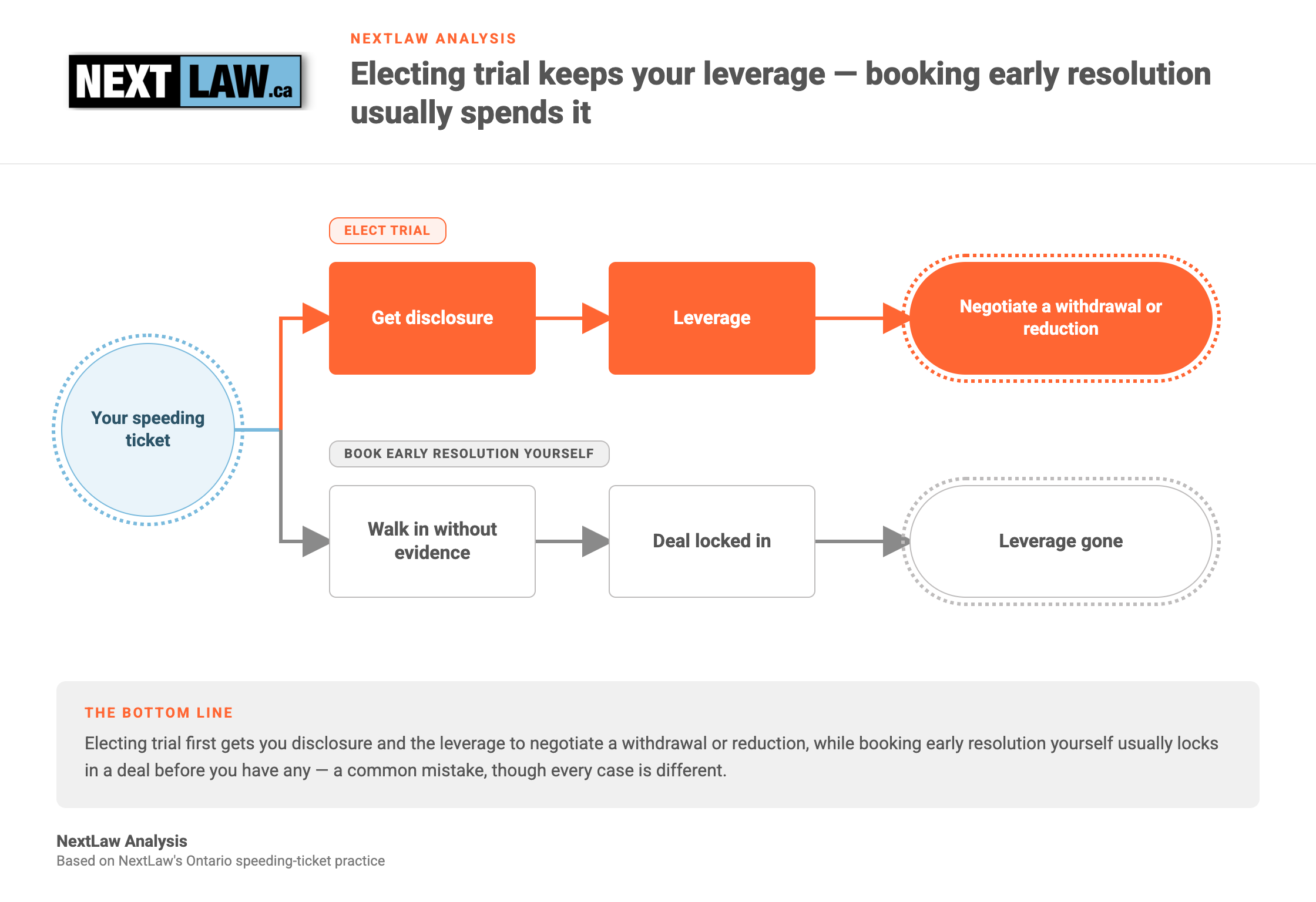
Here’s what we see all the time. Instead of electing a trial, a driver books an early-resolution meeting with the prosecutor themselves — and walks in without the evidence, without knowing where the legal openings are. They get no deal, or a mediocre one, and now it’s locked in. When they call us after that, we often turn them down — not because we can’t argue, but because in our experience, once a prosecutor’s early-resolution position is set, even a different prosecutor at a trial date is very reluctant to override it.
We’ve turned away G2 drivers and drivers with spotless records who, without realizing it, gave up the one thing that could have protected them — their leverage — before they ever picked up the phone. Sometimes the most honest thing a firm can tell you is that you needed us three weeks ago.
Dan Joffe at Next Law got my speeding ticket withdrawn, and I couldn’t be happier with the outcome.
Common questions about hiring help for an Ontario speeding ticket
Do you actually need a lawyer, or is a paralegal enough?
Not strictly. A licensed paralegal has the same authority in Provincial Offences Court that a lawyer does, so what protects your record is experience and preparation, not the title. Where NextLaw is different: we’re a law firm, led by a lawyer, but we handle speeding tickets at paralegal pricing — so you get a lawyer’s experience without paying lawyer rates.
What’s the best defence for a speeding ticket in Ontario?
Speeding is a strict-liability offence under the Highway Traffic Act — the Crown doesn’t have to prove you meant to speed, only that you did — so it isn’t about excuses, it’s about the evidence and the process. The realistic defence is usually the leverage of electing trial and reviewing disclosure, which can lead to a withdrawal or a reduction, not a courtroom acquittal.
Is it cheaper to just pay the speeding ticket?
Only if you ignore the insurance. The most recent Ontario Court of Justice data puts the average speeding fine at about $148 — but paying it is a conviction that could raise your insurance for years, potentially far more than the fee. Cheaper today isn’t always cheaper over the years that follow.
Source for the court figures above: Ontario Court of Justice, Provincial Offences Court Statistics (FY2026); NextLaw Analysis.
The bottom line — every ticket is worth checking
Got a speeding ticket in Ontario? Don’t pay it yet. Not every ticket is worth fighting — but every ticket is worth checking. Use our free insurance-impact calculator: seven quick questions to see how much your insurance could go up. Get your number first. Then, if it makes sense, book a free call for a straight answer. If you don’t need us, we’ll say so. You can also reach NextLaw at 833-639-8529 or help@nextlaw.ca.
NextLaw represents drivers in speeding and Highway Traffic Act matters in every court in Ontario. Services provided by a licensed lawyer and licensed paralegals at NextLaw. This article is general information about Ontario law, not legal advice for your specific case.

