
Handheld vs. Stationary Radar: Understanding the Difference for Your Ontario Speeding Case
Does it matter whether a handheld or stationary radar caught you? It can. Handheld radar depends heavily on how the officer aimed and held it, so operator technique and target identification are the pressure points. Stationary (vehicle-mounted) radar is more consistent but adds multi-vehicle tracking and moving-mode complexity. Knowing which was used tells you which questions the disclosure has to answer.
Not all radar tickets are created equal. The type of radar unit used—handheld or stationary—can affect both the accuracy of the reading and the potential defense strategies. Understanding these differences helps drivers evaluate their options more effectively.
Handheld Radar: Portable and Operator-Dependent
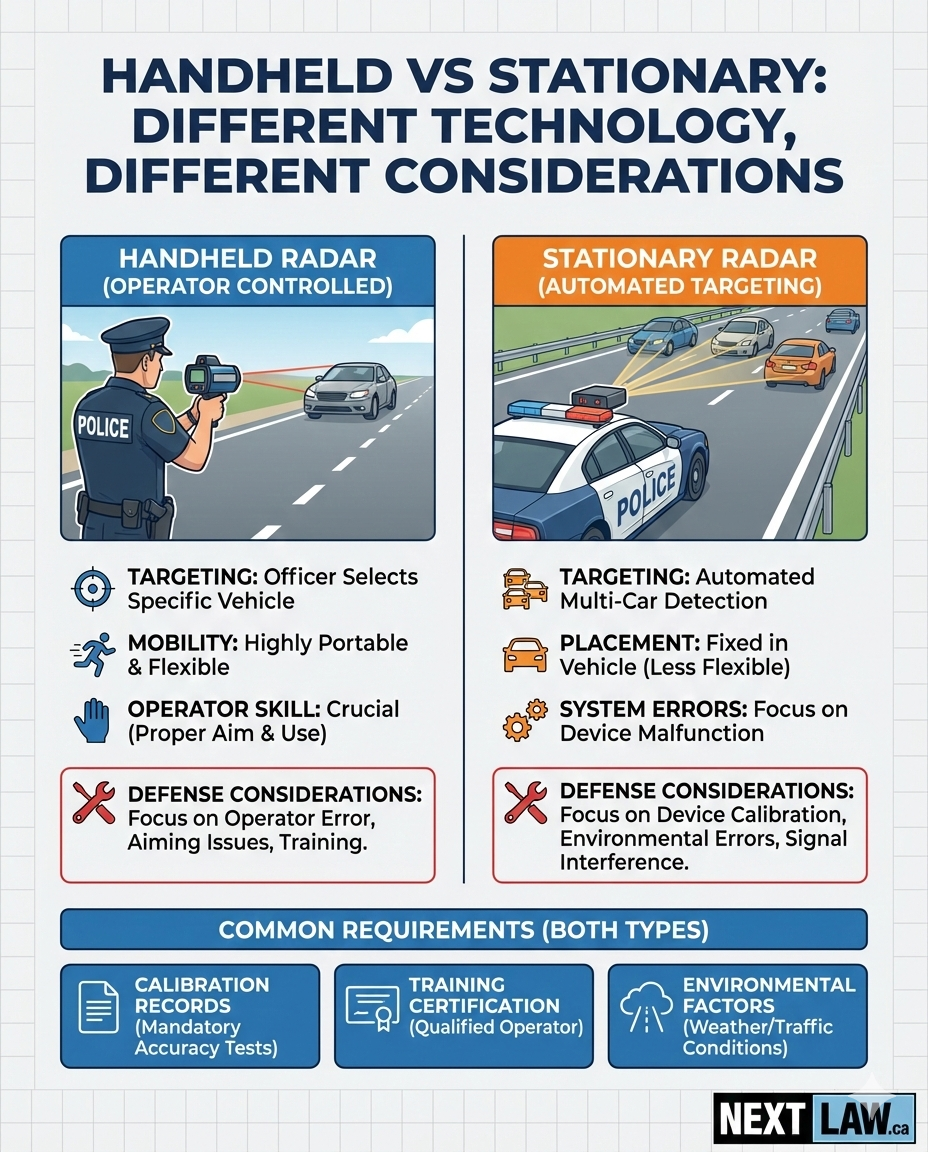
Handheld radar units are portable devices that officers aim manually at target vehicles. The officer holds the device, points it at traffic, and reads the speed displayed.
Characteristics of Handheld Radar
- The officer controls the aiming direction and selects targets visually before or while taking a reading
- Readings depend significantly on operator technique—holding the device steady, aiming accurately, and identifying the correct target
- The device is portable and can be used from various positions
- Officers can operate from foot, from a parked vehicle, or from cover
Potential Defense Considerations
Handheld radar introduces more variables related to operator technique. Common considerations include:
- Was the device aimed correctly at the target vehicle, or might the beam have captured another vehicle?
- Was the operator properly trained and positioned?
- Did environmental factors affect the reading?
- Was there potential for confusion between multiple vehicles?
Stationary (Vehicle-Mounted) Radar: More Consistent but Not Perfect
Stationary radar units are mounted in patrol vehicles and often operate automatically or semi-automatically. They can monitor traffic continuously without requiring the officer to hold and aim a device.
Characteristics of Stationary Radar
- Mounted antennas provide consistent positioning
- Can monitor front and rear simultaneously
- Often includes both stationary mode (patrol car stopped) and moving mode (patrol car in traffic)
- More sophisticated tracking and display systems
Potential Defense Considerations
Different considerations apply for stationary radar:
- In multi-lane traffic, which vehicle triggered the reading?
- Moving mode calculations are more complex and introduce additional variables
- The system’s automatic targeting may select the strongest signal rather than the intended target
How the Type Affects Your Case
The distinction between handheld and stationary radar affects case analysis in several ways:
- Officer notes matter differently. For handheld radar, notes about positioning, aiming, and target identification are crucial. For stationary radar, notes about which vehicle was tracked and how it was identified take priority.
- Training requirements vary. Operators must be trained on the specific equipment used. Different devices require different certification.
- Error sources differ. Handheld devices are more susceptible to operator error. Stationary devices can have issues with multi-vehicle tracking and target identification.
What to Look for in Disclosure
When reviewing disclosure, examine:
- The specific device make and model used
- The mode of operation (stationary vs. moving)
- The officer’s description of targeting and vehicle identification
- Calibration records specific to the device
- Training records for the specific device type
Neither Type Is Infallible
Both handheld and stationary radar systems are accepted by courts as reliable speed measurement tools. However, acceptance doesn’t mean infallibility. Every reading depends on proper device function, correct calibration, trained operation, and accurate target identification.
Understanding which type was used in your case—and the specific considerations for that type—is part of thorough case analysis.
Why Equipment Accuracy Matters for Your Insurance
A speeding conviction under Section 128 of the Highway Traffic Act carries insurance consequences. Depending on how far over the limit you were charged, most Ontario insurers classify the conviction as minor or major. For a typical minor conviction (1-29 km/h over), expect $510–$1,200 in additional premiums over three years. For a major conviction (30-49 km/h over), the cost climbs to $1,785–$4,335 over three years. That’s why challenging the technical evidence—whether it’s the radar type, calibration records, or operator training—can mean the difference between a conviction that costs thousands in insurance surcharges and a withdrawal that protects your record.
Should You Challenge the Evidence?
Not every ticket is worth fighting—but every ticket is worth checking. If disclosure reveals gaps in calibration records, incomplete operator training documentation, or environmental factors that could affect accuracy, you have options.
NextLaw uses a strategy called sustained pressure. Rather than taking the first deal offered at early resolution, we opt for trial—not because we want a trial, but because the court rarely does. We request disclosure repeatedly, creating system friction. Pressure accumulates. At the trial date, there’s a 5-10% chance the officer doesn’t show (immediate win). If the officer does show, we negotiate from a position of strength because the prosecutor wants to clear the case.
Frequently Asked Questions
What is the difference between handheld and stationary radar?
Handheld units are aimed manually by the officer, so operator technique matters most. Stationary (vehicle-mounted) units are more consistent but add multi-vehicle tracking and moving-mode complexity.
Is handheld radar less accurate?
It introduces more operator-dependent variables — aiming, holding steady, and identifying the correct target — so those are the common defence considerations.
Can stationary radar catch the wrong vehicle?
Yes. Its automatic targeting can select the strongest signal rather than the intended vehicle, and moving-mode calculations add further complexity.
How do I tell which radar type was used?
The disclosure should show the device make and model, the mode of operation (stationary vs. moving), and the officer’s description of targeting — plus calibration and training records for that device.
Does the radar type change my defence?
It can. Handheld cases focus on aiming and target identification; stationary cases focus on which vehicle was tracked and moving-mode accuracy.
Talk to a Speeding Ticket Law Firm
NextLaw is a law firm that focuses on fighting Ontario speeding tickets to protect your insurance. Whichever radar type caught you, a free 15-minute call and a disclosure review will surface the right questions. Book a free call with NextLaw or explore our free tools.
About this estimate. Insurance figures above are projections based on Ontario insurance industry data. Your actual premium change depends on your insurer’s proprietary rules, your policy, your driving record, and other personal factors. NextLaw is a law firm, not an insurance broker.
Real Speeding Ticket Result
“The time, effort, and commitment they invested were far beyond what I expected. I cannot thank them enough for their support during one of the most stressful periods of my life.” — Khushbu Bhambhwani, NextLaw client (verified 5-star Google review #39)
The Bottom Line
Whether your ticket came from handheld or stationary radar, the evidence should be carefully analyzed. Each type has different potential weaknesses and different questions that should be asked. Understanding these differences is part of evaluating your defense options.
This article is based on NextLaw’s professional analysis of Ontario speeding legal procedures and is provided for informational purposes only. Every case presents unique circumstances, and outcomes depend on specific case facts and proper legal representation.

