
I Wasn’t Speeding: Understanding Radar Targeting and Your Options
What can you do if you weren’t actually speeding? “I wasn’t speeding” is a belief, not a defence — the prosecution has a radar or lidar reading. What creates reasonable doubt is challenging whether that reading really came from your car: in multi-lane traffic a device can lock onto a larger vehicle nearby, and calibration or targeting gaps in the disclosure can undermine the reading. Request disclosure and turn your belief into specific grounds.
If you’ve received a speeding ticket but believe you weren’t actually speeding, you’re not alone. Many drivers question whether the radar or lidar reading actually captured their vehicle. Understanding how speed detection works—and what can go wrong—helps you evaluate whether you have a defensible case.
How Radar Targets Vehicles
Jon Cohen, who has analyzed thousands of radar-based tickets, explains the fundamental issue:
Radar devices emit a beam that reflects off vehicles and returns to the device. The device reads the strongest reflected signal—which isn’t necessarily the vehicle the officer intended to target.
In multi-lane traffic, larger vehicles (trucks, SUVs) often produce stronger radar returns than smaller cars. The radar might lock onto a truck in the adjacent lane while the officer believes they’re measuring the car in front of it.
The “Which Vehicle” Question
Dan Joffe, traffic lawyer at NextLaw, identifies this as a common area for legitimate defense:
Can the prosecution prove that the radar reading came from your specific vehicle and not another vehicle nearby? In heavy traffic, this can be difficult to establish definitively.
How Lidar Targets Vehicles
Lidar uses a narrower beam than radar, which makes targeting more precise—but not perfect:
- At longer distances, even the narrow lidar beam covers a wider area
- At 1,000 feet, the beam might be several feet wide
- In some traffic conditions, multiple vehicles could be within the beam’s path
Jon Cohen notes that while lidar is generally more precise than radar, the “which vehicle” question can still arise in certain circumstances.
What “I Wasn’t Speeding” Really Means
Dan Joffe clarifies the legal framing:
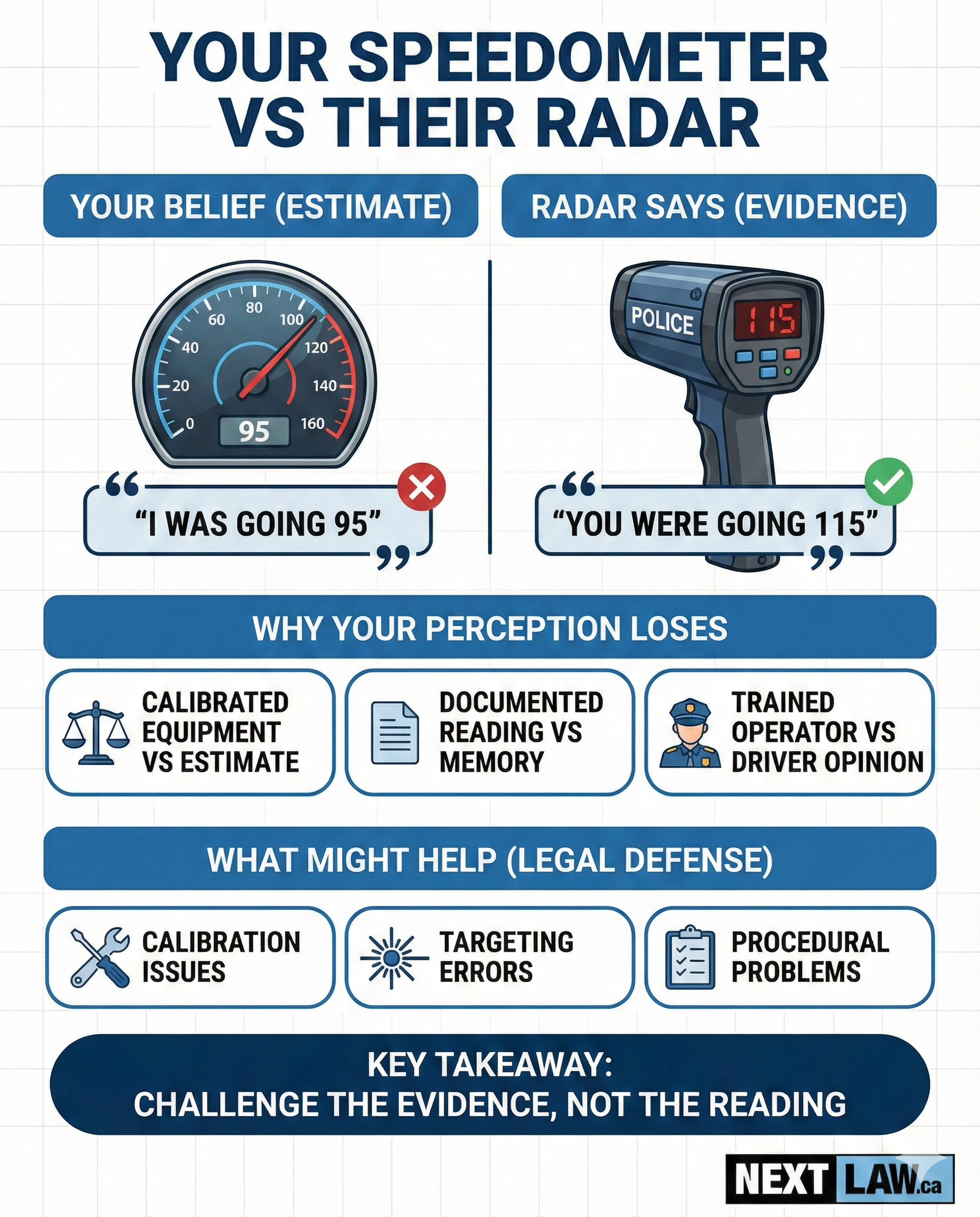
Saying “I wasn’t speeding” is your belief. It’s not evidence. The prosecution has a radar or lidar reading—that’s their evidence. Simply asserting you weren’t speeding doesn’t create reasonable doubt.
What does create reasonable doubt is challenging whether their evidence actually proves you were speeding. This might involve questions about calibration, targeting, or which vehicle was measured.
When You Have a Real Defense
Jon Cohen identifies situations where “I wasn’t speeding” can become a legitimate defense:
- Multi-lane traffic where your vehicle wasn’t the largest or closest
- Heavy traffic where target identification is questionable
- Environmental conditions that could affect readings
- Calibration or procedural issues in the disclosure
- Inconsistencies in the officer’s notes about targeting
When It’s Harder to Defend
Dan Joffe is realistic about challenging situations:
- If you were the only vehicle in sight and the officer has clear notes about targeting you specifically, the “wrong vehicle” defense becomes difficult.
- If disclosure shows perfect calibration and proper procedures, challenging the equipment is harder.
- Simply believing you weren’t speeding isn’t enough—you need specific grounds to challenge the evidence.
What to Do If You Believe You Weren’t Speeding
Jon Cohen recommends these steps:
- Request disclosure. See what evidence the prosecution actually has.
- Note the traffic conditions. Were there other vehicles nearby? What were the circumstances?
- Look for targeting issues. Do the officer’s notes clearly identify how your vehicle was targeted and tracked?
- Consider professional review. Someone experienced in analyzing disclosure may identify issues you’d miss.
Insurance Impact: What a Conviction Costs
Whether you believe you were speeding or not, if you’re convicted, your insurance goes up. Here’s what that costs:
- 1–15 km/h over (0 demerit points): $510–$1,200 over three years
- 16–29 km/h over (3 demerit points): Same as above for most insurers
- 30–49 km/h over (4 demerit points): $1,785–$4,335 over three years
On average Ontario premiums of $2,500, a conviction can cost up to $1,875 in insurance surcharges over three years. This is why thoroughly challenging the evidence matters—the financial cost of conviction is significant.
Frequently Asked Questions
What can I do if I wasn’t actually speeding?
“I wasn’t speeding” is your belief, not evidence. Request disclosure and look for specific grounds — calibration gaps, targeting issues, or which-vehicle questions — that challenge whether the reading really came from your car.
Can radar catch the wrong vehicle?
Yes. It reads the strongest reflected signal, and a larger vehicle in an adjacent lane can produce a stronger return than your car, so in traffic the reading may not be yours.
Is “I wasn’t speeding” a defence on its own?
No. Simply asserting it does not create reasonable doubt. What does is challenging the prosecution’s evidence — calibration, targeting, or which vehicle was measured.
When do I have a real wrong-vehicle defence?
In multi-lane or heavy traffic where your car was not the largest or closest, when environmental conditions could affect the reading, or when the officer’s notes do not clearly establish how your vehicle was targeted.
When is it harder to argue I wasn’t speeding?
When you were the only vehicle in sight with clear targeting notes, or when disclosure shows proper calibration and procedures — then you need specific evidentiary grounds, not just your belief.
Talk to a Speeding Ticket Law Firm
NextLaw is a law firm that focuses on fighting Ontario speeding tickets to protect your insurance. If you’re sure the reading wasn’t yours, a free 15-minute call and a disclosure review can turn that belief into a defence. Book a free call with NextLaw or explore our free tools.
About this estimate. Insurance figures above are projections based on Ontario insurance industry data. Your actual premium change depends on your insurer’s proprietary rules, your policy, your driving record, and other personal factors. NextLaw is a law firm, not an insurance broker.
Real Speeding Ticket Result
“The time, effort, and commitment they invested were far beyond what I expected. I cannot thank them enough for their support during one of the most stressful periods of my life.” — Khushbu Bhambhwani, NextLaw client (verified 5-star Google review #39)
Turn Your Belief Into a Defense
Believing you weren’t speeding is a starting point, not a defense. The defense comes from identifying specific problems with how the prosecution’s evidence was gathered. Request disclosure, analyze it carefully, and see if your belief can become a legitimate challenge to their case.
This article is based on NextLaw’s professional analysis of Ontario speeding legal procedures and is provided for informational purposes only. Every case presents unique circumstances, and outcomes depend on specific case facts and proper legal representation.

