
Common Speed Detection Errors: What Can Go Wrong With Radar and Lidar
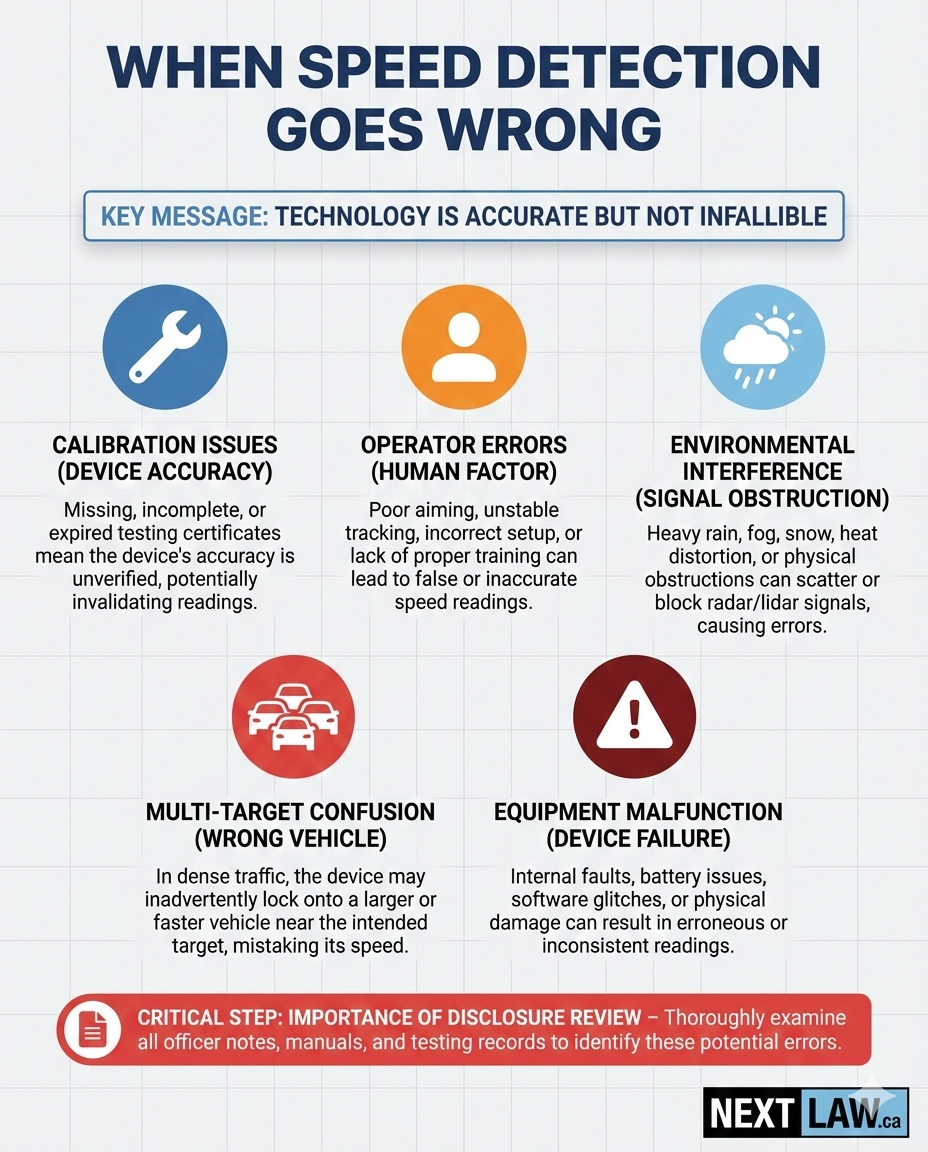
What can go wrong with a radar or lidar speed reading? Plenty: the cosine (angle) effect, the device locking onto a larger vehicle in traffic, radio-frequency interference, calibration drift, operator error, weather, and multi-path reflections off buildings or trucks. The prosecution has to prove the reading was accurate — and each of these is a place reasonable doubt can live if the disclosure supports it.
Radar and lidar are sophisticated technologies, but they’re not perfect. Various factors can cause these devices to produce inaccurate readings. Understanding potential error sources helps drivers evaluate whether challenging their ticket makes sense.
Cosine Effect (Angle Error)
The cosine effect is one of the most misunderstood potential errors.
When a radar or lidar beam is aimed at an angle to a vehicle’s path rather than directly head-on, it measures only the component of speed coming directly toward (or away from) the device. The reading will be lower than the actual speed—not higher.
This means the cosine effect generally works in the driver’s favor, not against them. However, it becomes relevant when the measured speed is very close to the alleged speed—small margins matter in these cases.
Vehicle Interference
Multi-lane traffic creates the potential for vehicle confusion. Radar devices track the strongest reflected signal, which may come from a different vehicle than the officer intended to target.
Larger vehicles with flat reflective surfaces (trucks, buses, SUVs) often produce stronger radar returns than smaller cars. In traffic, the radar might lock onto a nearby truck while the officer believes they’re targeting the car in front of it.
For lidar, the narrower beam reduces but doesn’t eliminate this concern—especially at longer distances where even the narrow beam covers a wider area.
Radio Frequency Interference
Radar devices can be affected by external radio frequency sources. Interference can come from:
- Nearby power lines or electrical equipment
- Other electronic devices
- Radio towers or broadcasting equipment
- Other radar units operating nearby
- Even some electronic accessories in vehicles
While modern radar units have interference rejection systems, these aren’t foolproof. Strange or inconsistent readings can sometimes be traced to interference sources.
Calibration Failures
If a device isn’t properly calibrated, all readings from that device are potentially unreliable. Calibration can drift over time, batteries can affect performance, and environmental conditions can impact accuracy.
The calibration requirements—annual certification, tuning fork tests, pre/post-shift verification—exist specifically to catch these issues. When calibration procedures aren’t followed, the reliability of any reading is questionable.
Operator Error
Speed measurement devices require trained operation. Operator errors can include:
- Improper aiming or targeting
- Confusing targets in traffic
- Misreading the display
- Failing to verify the device is functioning correctly
- Using incorrect operating modes
Disclosure review often reveals incomplete officer notes that don’t adequately document the targeting process—which can raise questions about whether proper procedures were followed.
Environmental Factors
Both radar and lidar can be affected by environmental conditions:
- Heavy rain or snow can interfere with readings
- Fog can cause issues, particularly for lidar
- Temperature extremes can affect device performance
- Reflective surfaces (wet pavement, certain road signs) can create ghost signals
Multi-Path and Reflection Errors
Radar beams can reflect off buildings, overpasses, or large vehicles and create false readings. This “multi-path” effect is rare with modern equipment but can occur in certain environments—particularly near large metal structures or in urban canyons.
Why Understanding Errors Matters
Identifying potential errors doesn’t guarantee a defense will succeed. However, understanding what can go wrong helps evaluate whether a particular case has defensible issues.
The prosecution must prove the speed reading was accurate. If reasonable doubt exists about the reliability of that reading, the charge may not stand.
Why Equipment Accuracy Matters for Your Insurance
A speeding conviction under Section 128 of the Highway Traffic Act carries insurance consequences. Depending on how far over the limit you were charged, most Ontario insurers classify the conviction as minor or major. For a typical minor conviction (1-29 km/h over), expect $510–$1,200 in additional premiums over three years. For a major conviction (30-49 km/h over), the cost climbs to $1,785–$4,335 over three years. That’s why challenging the technical evidence—whether it’s radar calibration, operator error, or environmental factors—can mean the difference between a conviction that costs thousands in insurance surcharges and a withdrawal that protects your record.
Should You Challenge the Evidence?
Not every ticket is worth fighting—but every ticket is worth checking. If disclosure reveals potential calibration issues, operator error, environmental factors, or vehicle identification problems, you have options.
NextLaw uses a strategy called sustained pressure. Rather than taking the first deal offered at early resolution, we opt for trial—not because we want a trial, but because the court rarely does. We request disclosure repeatedly, creating system friction. Pressure accumulates. At the trial date, there’s a 5-10% chance the officer doesn’t show (immediate win). If the officer does show, we negotiate from a position of strength because the prosecutor wants to clear the case.
Frequently Asked Questions
What errors can radar and lidar make?
The cosine (angle) effect, locking onto a larger nearby vehicle, radio-frequency interference, calibration drift, operator error, weather, and multi-path reflections off buildings or trucks.
What is the cosine effect?
When the beam hits a vehicle at an angle it reads only the portion of speed heading toward the device, so the reading is lower than the true speed — it works in the driver’s favour, but matters when the measured speed is close to the alleged speed.
Can radar lock onto the wrong car?
Yes. Radar tracks the strongest reflected signal, and larger vehicles reflect more strongly, so in multi-lane traffic it can read a truck or SUV instead of the intended car.
Can weather affect a speed reading?
It can. Heavy rain or snow, fog (especially for lidar), temperature extremes, and reflective wet surfaces can all interfere with a reading.
Does finding an error guarantee my ticket is dismissed?
No. But the prosecution must prove the reading was accurate, so a credible error supported by the disclosure can create the reasonable doubt needed to win or reduce the charge.
Talk to a Speeding Ticket Law Firm
NextLaw is a law firm that focuses on fighting Ontario speeding tickets to protect your insurance. If you think the reading was wrong, a free 15-minute call and a disclosure review can tell you whether there’s a defensible error. Book a free call with NextLaw or explore our free tools.
About this estimate. Insurance figures above are projections based on Ontario insurance industry data. Your actual premium change depends on your insurer’s proprietary rules, your policy, your driving record, and other personal factors. NextLaw is a law firm, not an insurance broker.
Real Speeding Ticket Result
“I had a great experience with NextLaw in handling my driving convictions.” — Phil Yassa, NextLaw client (verified 5-star Google review #147)
Every Case Deserves Analysis
No speed measurement technology is perfect. Every speeding ticket based on radar or lidar evidence deserves analysis of the specific circumstances, equipment used, and procedures followed. Understanding potential error sources is the starting point for that analysis.
This article is based on NextLaw’s professional analysis of Ontario speeding legal procedures and is provided for informational purposes only. Every case presents unique circumstances, and outcomes depend on specific case facts and proper legal representation.

