

By Dan Joffe, Lawyer at NextLaw (LSO #37145V) · Published September 28, 2026 · Last updated September 28, 2026 · Ontario, Canada
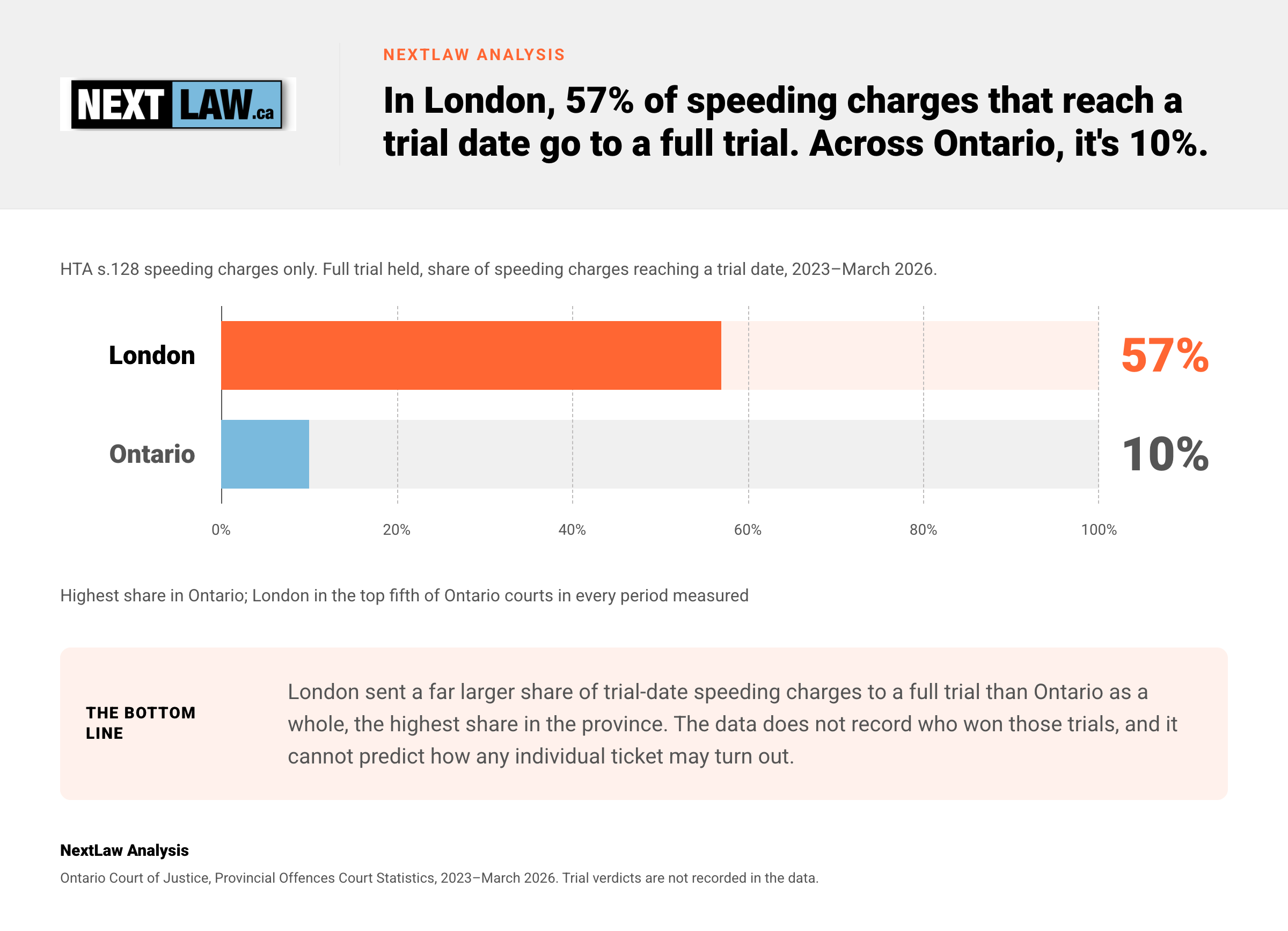
Short answer: Looking for a traffic ticket lawyer in London, Ontario? London’s court works differently from the rest of the province. According to NextLaw Analysis of Ontario Court of Justice data, since 2023 London’s court has held a full trial on 57% of the speeding charges that reach a trial date. That is the highest share in Ontario, where it is 10%. So a traffic ticket lawyer in London has to be ready to run a trial. The data can’t predict your insurance or your own odds, but it shows what a representative here must be ready for.

Traffic ticket lawyer London: what the court data shows about trials
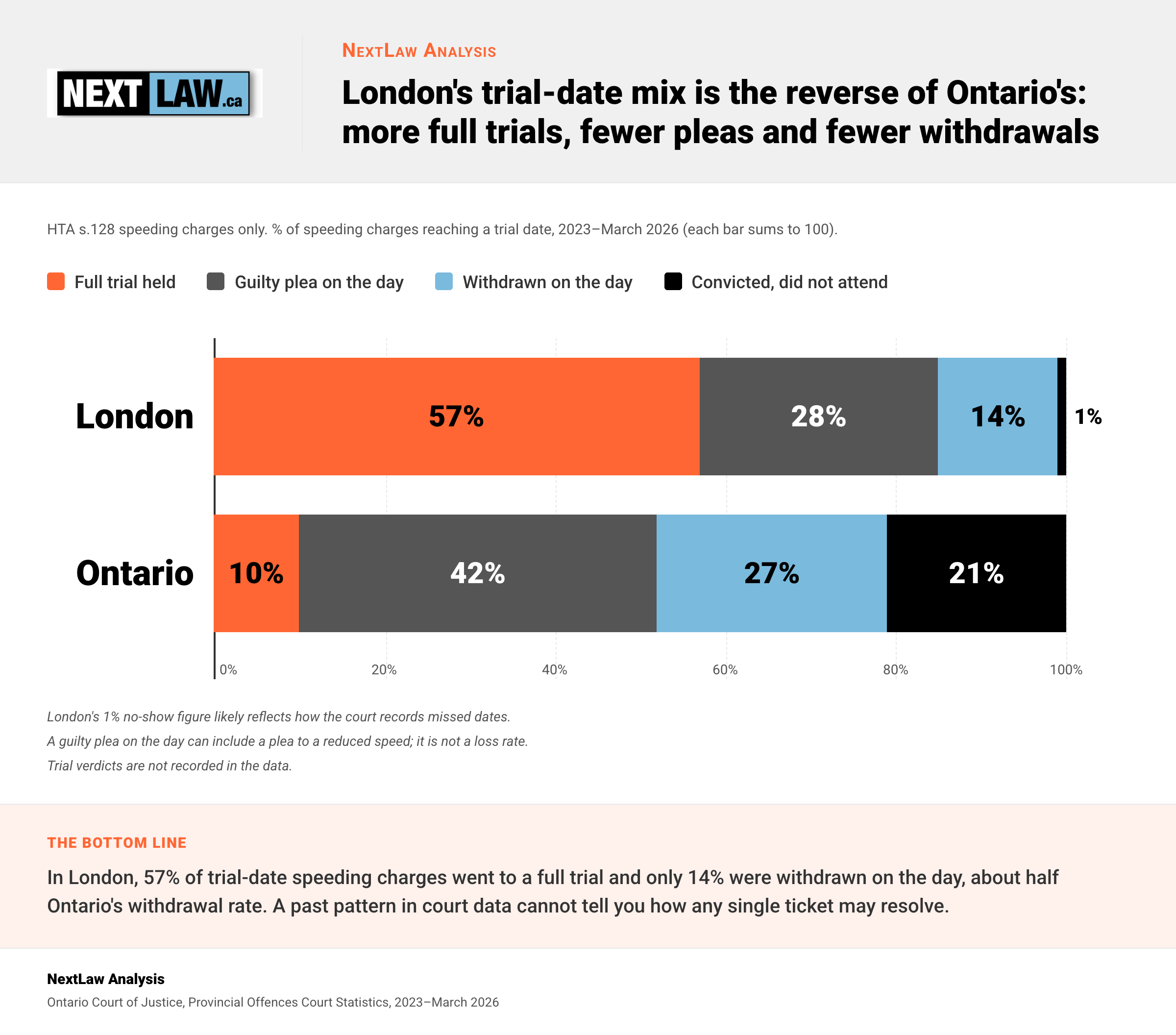
We analyzed eleven years of Ontario Court of Justice data, 2015 through March 2026, for speeding charges under the Highway Traffic Act (section 128) in London, Ontario. Across 2023 to March 2026, 57% of London charges that reached a trial date went to a full trial, against 10% across Ontario. London was in the top fifth of Ontario courts in every period we measured.
The rest of London’s trial-date charges ended differently from the provincial pattern too. Only 14% were withdrawn on the day, about half the provincial rate of 27%. And 28% ended in a guilty plea on the day, against 42% across Ontario. These figures are for speeding charges specifically.
| How the charge ended on the trial date (2023 to March 2026) | London | Ontario |
|---|---|---|
| Full trial held | 57% | 10% |
| Guilty plea on the day | 28% | 42% |
| Withdrawn on the day | 14% | 27% |
| Convicted because the driver did not attend | 1% | 21% |
That’s recent. From 2015 to 2019, London looked like the rest of Ontario.
Source: Ontario Court of Justice, Provincial Offences Court Statistics (2015–March 2026); analysis by NextLaw.
What the London data can’t tell you
The data can’t tell us who won those trials, because verdicts after a full trial are not recorded. London also records almost no missed trial dates: 1% of charges reaching a trial date end in a conviction because the driver did not attend, against 21% across Ontario. So some convictions in a driver’s absence may be counted as trials in London’s figures. The data describes the court, not your odds.
What that means for hiring a traffic ticket lawyer in London
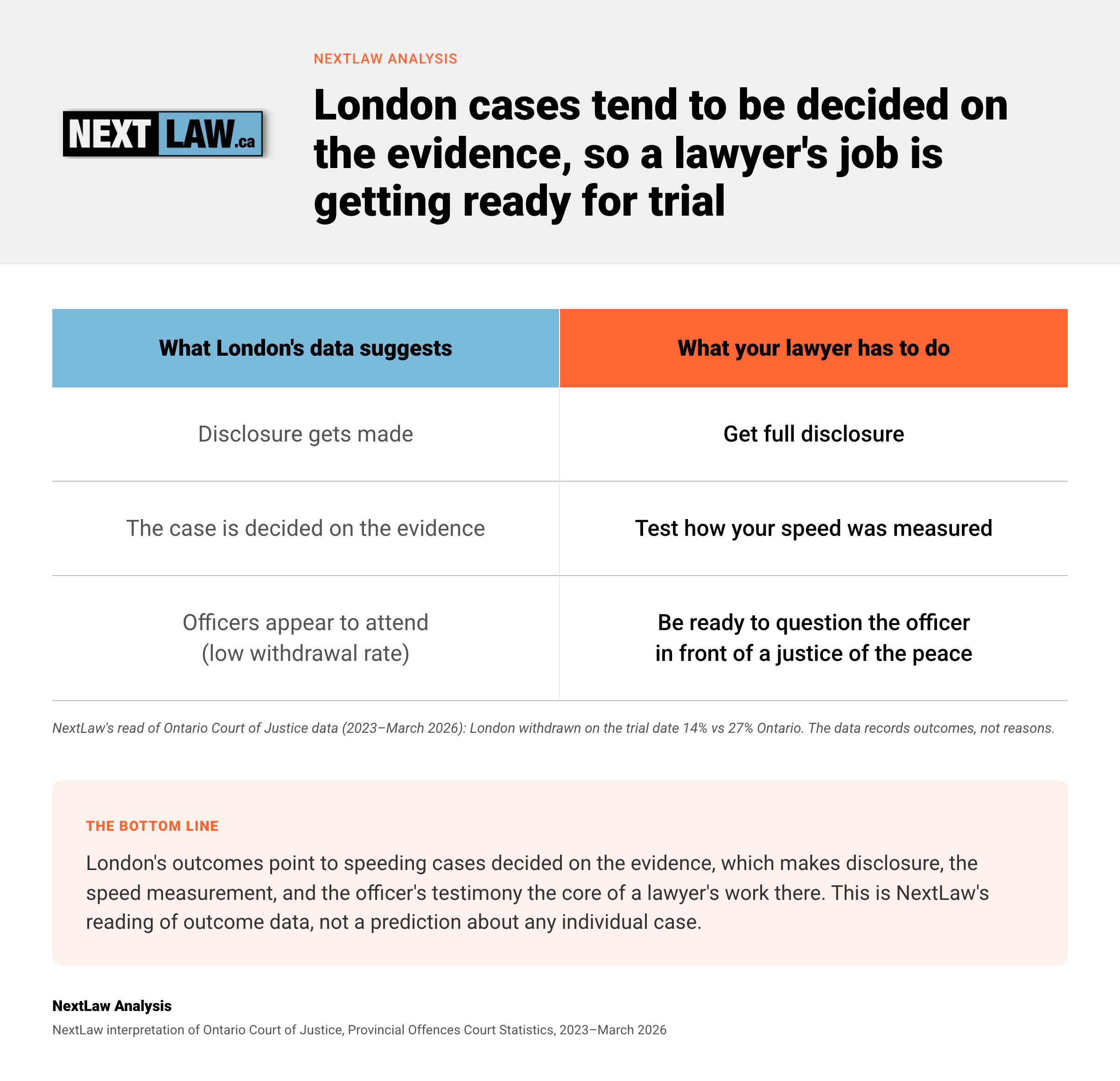
Our read at NextLaw is this. A speeding charge rests on the officer’s evidence. When that evidence isn’t there on the trial date, the charge is often withdrawn. London’s low withdrawal rate suggests officers attend and disclosure gets made, so the case is decided on the evidence.
That changes what you’re hiring for. In London, a lawyer has to:
- get full disclosure from the prosecution,
- test how your speed was measured, and
- be ready to question the officer in front of a justice of the peace.
Counting on the case falling apart is a weak plan here. Compare our Brampton court data, where the pattern runs the other way and most speeding charges reaching a trial date are withdrawn on the day.
They were amazing from start to finish. They explained the process clearly, fought hard for me in court, and got a great result.
What to do if you have a London speeding ticket
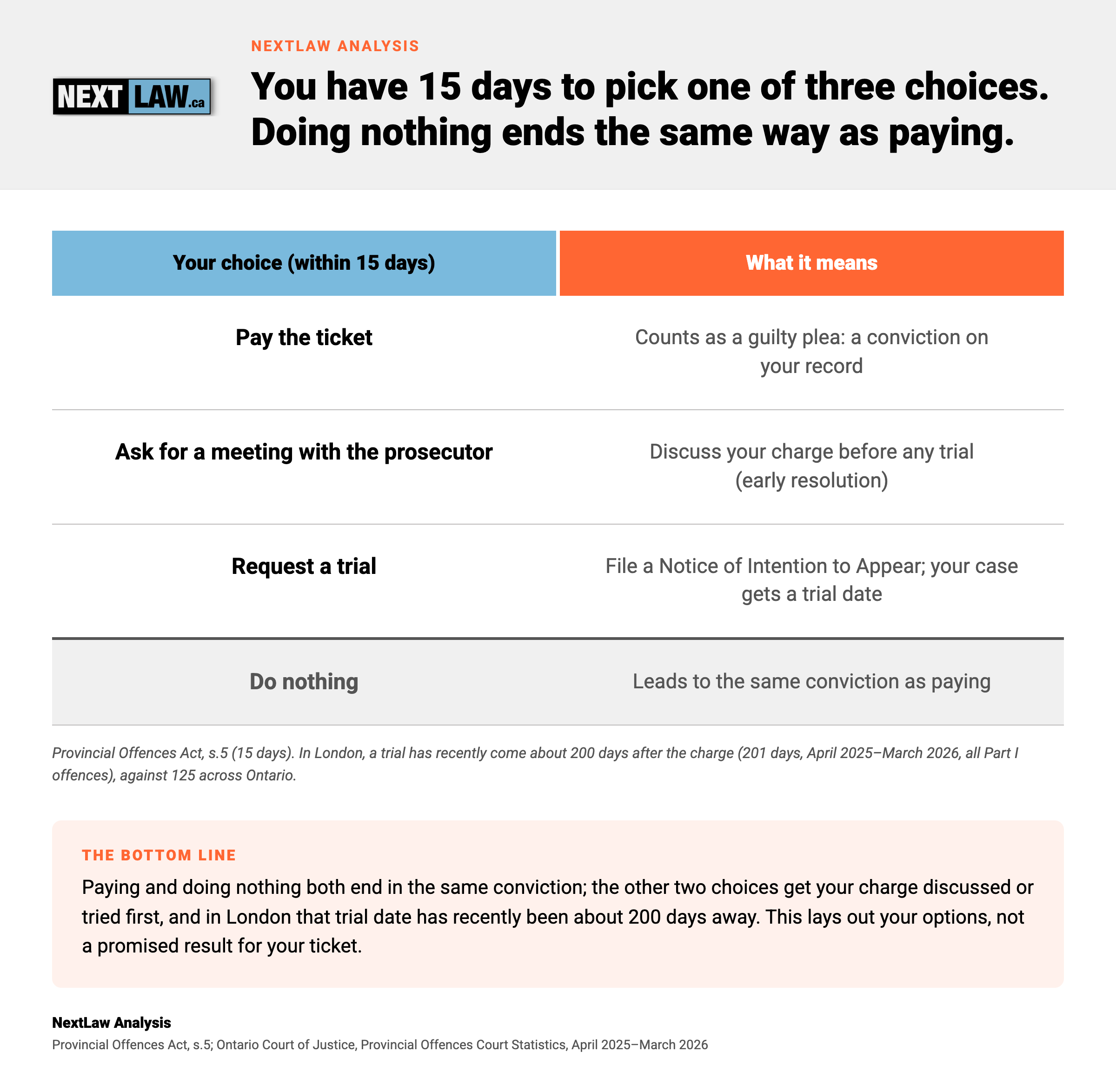
You have fifteen days to make one of three choices (Provincial Offences Act, section 5):
- Pay the ticket.
- Ask for a meeting with the prosecutor.
- Request a trial.
Paying is a guilty plea, and ignoring the ticket leads to the same conviction. In London, you request a trial by filing a Notice of Intention to Appear, by email or in person at 824 Dundas Street. The City of London’s Provincial Offences page sets out each option.
Plan for the wait. NextLaw Analysis of the same court data puts a recent London trial at about 200 days after the charge (201 days, April 2025 to March 2026), against 125 across Ontario. That figure covers all Part I offences, not speeding alone.
Not every ticket is worth fighting. But every ticket is worth checking. A conviction could raise your insurance, and how much depends on your own insurer. Our free insurance calculator asks 7 quick questions to estimate how much your insurance could go up. Get your number first. Then, if it makes sense, book a free call for a straight answer.
How the camera years were handled
Speed cameras operated in Ontario from July 2020 until they were banned on November 14, 2025. Camera tickets were issued to the vehicle owner, carried no demerit points, and never touched a driving record. Because they distorted how many tickets were issued and how many were simply paid, this analysis uses the five camera-free years, 2015 to 2019, for those measures, confirmed against the first post-ban months of 2026. It uses the most recent three years only for what happens on the day of trial, where camera tickets almost never reached. London’s recent trial docket is about 60% of its pre-camera size, because camera tickets did not reach it.
Quick answers
Can I fight a speeding ticket by myself in Ontario?
Yes. You can represent yourself, or have a lawyer or licensed paralegal appear for you (Ontario Court of Justice, Guide for Defendants in Provincial Offences Cases; Provincial Offences Act, section 84). In London, that more often than not means running a trial yourself, including questioning the officer.
Is it worth it to fight a speeding ticket in Ontario?
It depends on your record and what a conviction could cost you. A plea to a lower speed can reduce or remove demerit points, but it doesn’t erase the conviction, and how your insurer rates it depends on its own rules.
About NextLaw
NextLaw is a speeding ticket law firm based in Toronto, representing drivers in every court in Ontario, including London. This article was written by Dan Joffe, Lawyer at NextLaw (Law Society of Ontario #37145V). For speeding ticket inquiries, call 647-558-2679. Court statistics current as of March 2026; this is general information about Ontario law, not legal advice about your specific case.

